

For businesses, employers, and other tax deductors, keeping track of TDS return filing due dates FY 2026-27 is essential for maintaining accurate tax records and avoiding compliance issues. The financial year 2026–27 also brings an important change because the Income Tax Act, 2025 and the new Income Tax Rules, 2026 introduce revised terminology and new TDS form numbers for transactions governed by the new framework.
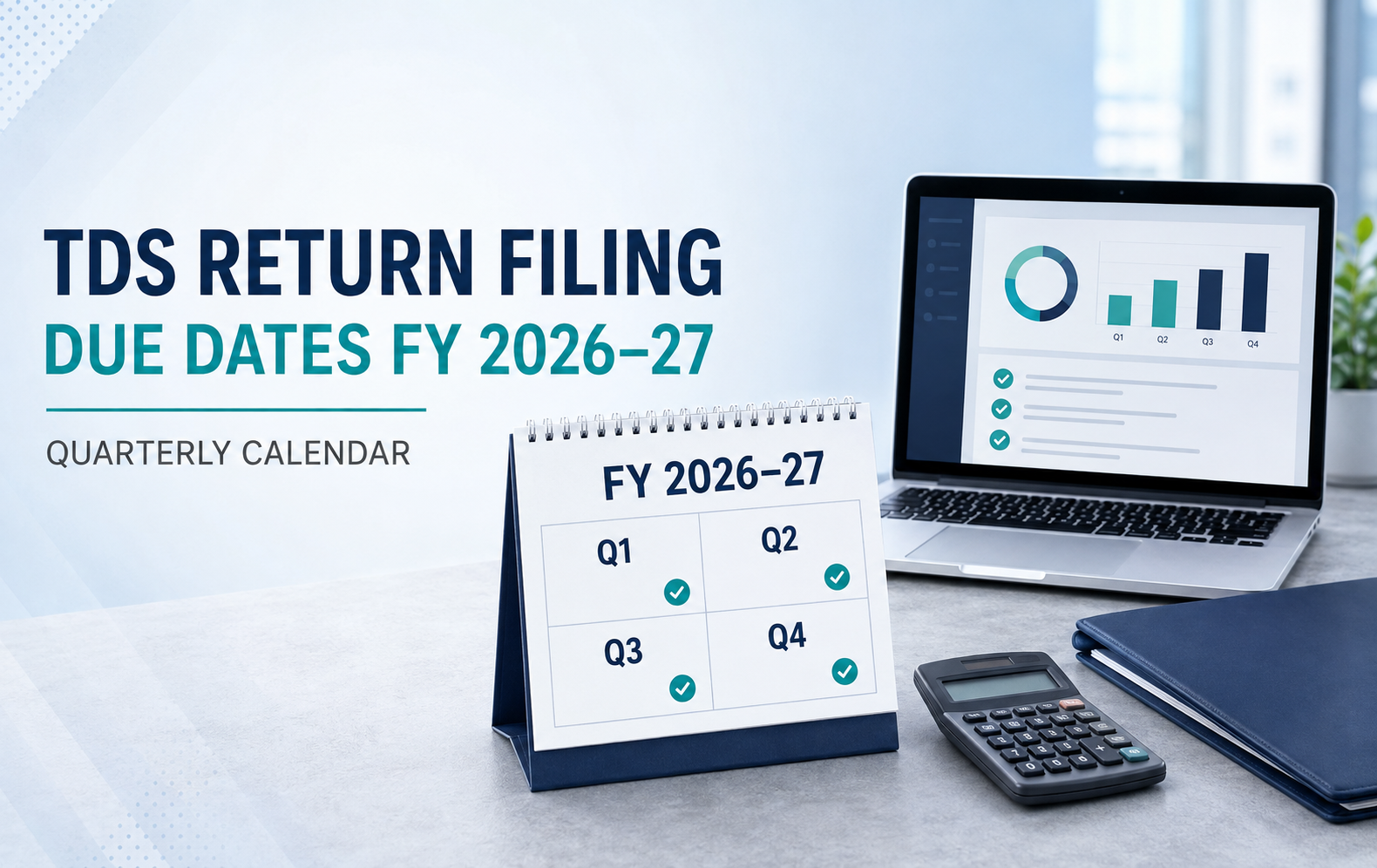
For regular quarterly TDS statements, the deadlines remain structured around four quarters: 31 July, 31 October, 31 January, and 31 May of the following financial year. Businesses can complete TDS return filing online based on the applicable form, which depends on whether TDS relates to salary, payments to residents, or payments to non-residents.
This guide explains the quarterly calendar, new forms, filing process, common mistakes, and important points that businesses, freelancers, and employees should understand.
TDS Return Filing Due Dates FY 2026-27: Quarterly Calendar
The quarterly TDS statement due dates for Tax Year 2026–27 are as follows:
|
Quarter |
Period Covered |
Regular Due Date |
|
Q1 |
April–June 2026 |
31 July 2026 |
|
Q2 |
July–September 2026 |
31 October 2026 |
|
Q3 |
October–December 2026 |
31 January 2027 |
|
Q4 |
January–March 2027 |
31 May 2027 |
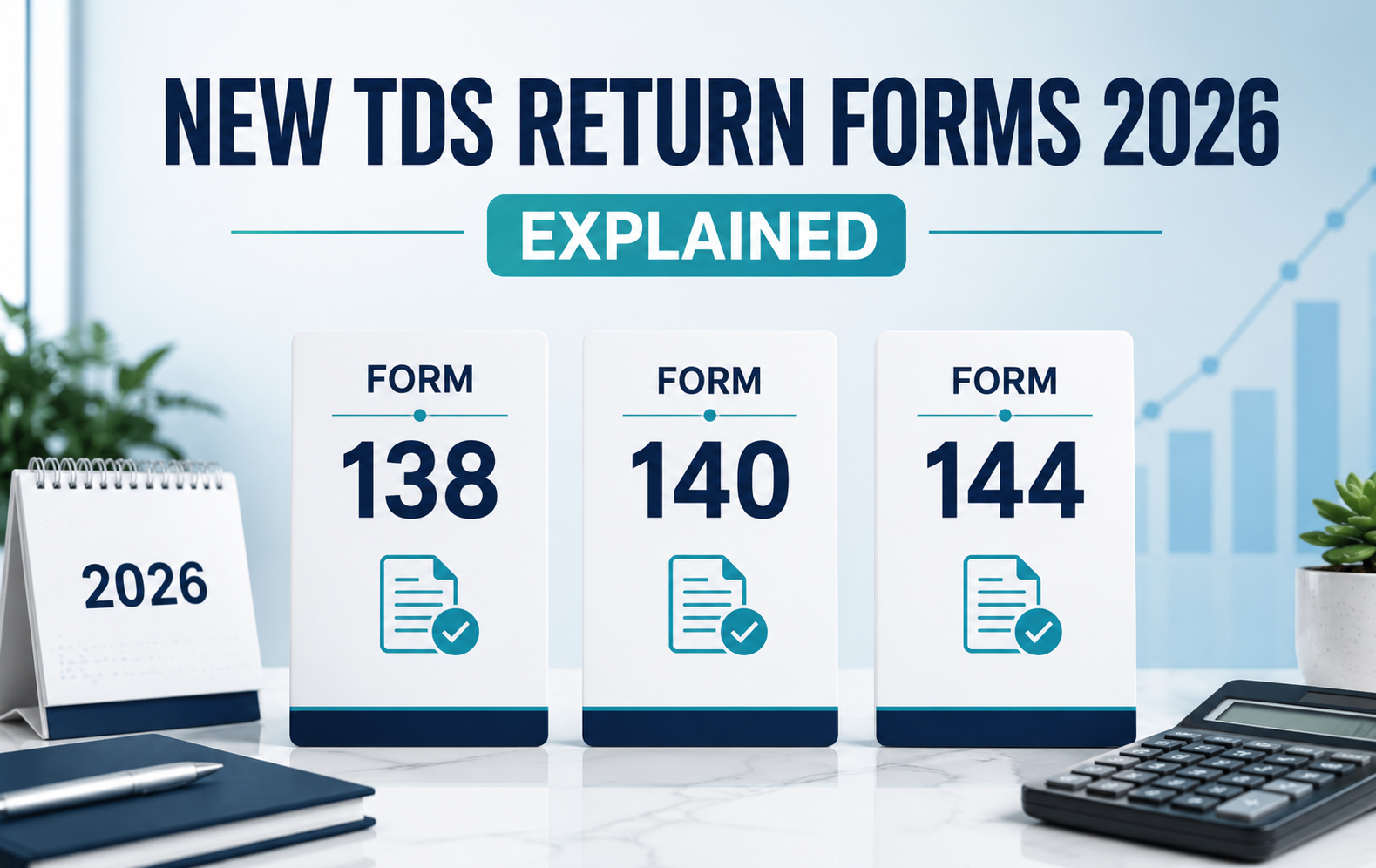
These dates apply to the relevant quarterly TDS statements, including Form 138 for salary-related TDS, Form 140 for non-salary payments to residents, and Form 144 for non-salary payments to non-residents.
The last quarter is different because its statement is filed after the financial year ends. Therefore, the Q4 statement for April 2026–March 2027 is due on 31 May 2027.
What Are the New TDS Forms for FY 2026-27?
From 1 April 2026, transactions falling under the new Income Tax Act framework use the revised form numbering. This means businesses should not automatically continue using the old Form 24Q or Form 26Q numbers for transactions governed by the new framework.
The key quarterly TDS forms include:
- Form 138: Salary, pension, or specified interest-related TDS reporting.
- Form 140: TDS on non-salary payments made to residents.
- Form 144: TDS on non-salary payments made to non-residents.
- Form 143: TCS statement for specified tax collection transactions.
The Income Tax Department confirms that Forms 138, 140, 143 and 144 are among the quarterly forms available on the e-Filing portal.
Form 24Q Replacement
Form 138 is the Form 24Q replacement for salary-related quarterly TDS reporting under the new framework. Employers and specified banks use it for applicable salary, pension, or specified interest-related reporting.
Form 26Q Replacement
Form 140 is the Form 26Q replacement for quarterly reporting of TDS deducted on non-salary payments made to residents. This can cover payments such as professional fees, commission, brokerage, rent, and other applicable payments.
Form 140 vs Form 144
The key difference is the residential status of the payee.
|
Form |
Main purpose |
Payee |
|
Form 140 |
Non-salary TDS reporting |
Resident |
|
Form 144 |
Non-salary TDS reporting |
Non-resident |
For example, if a business deducts TDS from professional fees paid to an Indian resident, Form 140 may apply. If the applicable payment is made to a non-resident and TDS is deducted, Form 144 may apply.
Who Needs to File a Quarterly TDS Statement?
A person or organisation responsible for deducting TDS generally needs to report the applicable deductions through the prescribed statement or form.
This can include:
- Companies and LLPs
- Partnership firms
- Government organisations
- Employers deducting salary TDS
- Individuals or other deductors making specified payments
- Businesses making applicable professional, rent, commission, or similar payments
However, the responsibility depends on whether TDS provisions apply to the particular payment and deductor.
What About Freelancers and Employees?
A freelancer who only receives payments with TDS deducted generally does not file a quarterly TDS statement merely because TDS was deducted from their income. The deductor is responsible for reporting the TDS.
Similarly, an employee generally does not file Form 138. The employer or applicable deductor handles the salary TDS statement. The employee uses the TDS information reported against their PAN while preparing their income tax return.
This distinction is useful because "TDS return filing" is often confused with filing an individual income tax return.
Businesses managing multiple tax obligations can simplify their compliance workflow with reliable online tax services, especially when coordinating TDS, income tax, and other routine filing requirements.
TDS Return Filing Process for FY 2026-27
The filing process should start well before the quarterly deadline. A practical workflow is:
1. Collect deduction records
Compile details of all applicable TDS deductions made during the quarter, including:
- Deductee PAN
- Amount paid or credited
- TDS amount
- Date of payment or credit
- Nature of payment
- Applicable section or provision
- Challan and payment details
2. Reconcile TDS payments
Match the TDS deducted in accounting or payroll records with the tax actually deposited with the government.
Any mismatch should be investigated before preparing the quarterly statement.
3. Select the correct form
Determine whether the transaction belongs in Form 138, Form 140, Form 144, or another applicable statement.
The correct form depends primarily on the nature of the payment and the reporting requirements applicable to the transaction.
4. Validate PAN and transaction details
Incorrect PANs, duplicate entries, incorrect deduction amounts, and missing records can create reporting problems.
Businesses should review employee and vendor master data regularly instead of waiting until the quarterly filing deadline.
5. Prepare and submit the statement
After reconciliation and validation, prepare the relevant statement using the applicable filing mechanism and submit it within the prescribed deadline.
The Income Tax Department's e-Filing portal currently lists the new quarterly forms as available.
After completing their applicable tax reporting requirements, eligible taxpayers can use professional online ITR filing services to prepare and submit their income tax returns efficiently.
TDS Deposit Date vs TDS Return Due Date
One of the most common compliance mistakes is treating TDS payment and TDS return filing as the same deadline.
They are separate obligations.
TDS deposit generally refers to depositing the tax deducted with the government within the prescribed payment timeline. TDS return filing refers to submitting the quarterly statement reporting the deductions.
For example, the general payment timeline continues to require TDS to be deposited by the 7th of the following month, with specific rules for March deductions and certain challan-cum-statement transactions. The Income Tax Department states that the Income Tax Rules, 2026 retain the relevant payment timelines.
Therefore, businesses should maintain two separate compliance calendars:
- Monthly TDS deposit deadlines
- Quarterly TDS statement deadlines
Form 138 vs Form 140: What Is the Difference?
Form 138 and Form 140 both involve quarterly TDS reporting, but they serve different categories of payments.
Form 138 primarily covers salary, pension, and specified interest-related reporting. Form 140 covers TDS on non-salary payments made to residents.
For employers, payroll records are central to Form 138. For businesses making payments to vendors, professionals, contractors, landlords, or other residents, transaction and vendor records are important for Form 140.
Choosing the correct form helps ensure that the TDS information reaches the tax system in the appropriate reporting format.
Common TDS Filing Mistakes to Avoid
Even when a business knows the deadline, errors in the statement can create additional compliance work. Common mistakes include:
- Filing the wrong form for the transaction
- Using an incorrect or invalid PAN
- Reporting a wrong TDS amount
- Failing to reconcile challans
- Missing deductee details
- Mixing old-framework and new-framework transactions
- Treating TDS deposit and return filing as one deadline
- Waiting until the final day to validate the statement
- Ignoring corrections from earlier statements
The transition to the new framework makes record separation particularly important. The Income Tax Department advises maintaining clear demarcation between transactions governed by the earlier and new Acts.
What Should Businesses Do During the 2026-27 Transition?
The 2026–27 tax year requires additional attention because the new Act and revised forms apply to transactions based on when the earlier of credit or payment occurs.
The Income Tax Department explains that if the earlier event occurs on or after 1 April 2026, the Income Tax Act, 2025 framework applies. Transactions governed by the earlier Act continue to follow the old framework, including relevant correction statements for earlier periods.
Businesses should therefore:
- Separate FY 2025–26 and FY 2026–27 records.
- Update payroll and accounting systems.
- Map old TDS forms to the applicable new forms.
- Check the new section numbering and terminology.
- Maintain supporting challans and deduction records.
- Review statements before submission.
- Keep track of both payment and quarterly filing deadlines.
Businesses uncertain about revised TDS provisions, form selection, or transition requirements can consider online tax consultation to clarify tax compliance requirements before filing.
How Can Businesses Stay Compliant?
A simple compliance routine can reduce last-minute errors.
Recommended approach:
- Record every TDS deduction when the transaction is processed.
- Deposit deducted tax within the applicable payment deadline.
- Reconcile the ledger with challan records every month.
- Review PAN and deductee information before quarter-end.
- Identify the correct quarterly form.
- Prepare the statement several days before the due date.
- Review validation errors and mismatches.
- Save filing acknowledgements and supporting records.
For businesses with a large number of employees, vendors, or transactions, maintaining a structured TDS compliance process can make quarterly reporting easier to manage.
Businesses managing multiple statutory obligations can also streamline their GST compliance through GST return filing online alongside their regular TDS reporting activities.
Conclusion
Understanding TDS return filing due dates FY 2026-27 is only one part of maintaining TDS compliance. Businesses also need to distinguish monthly TDS payment deadlines from quarterly statement deadlines and select the correct form for each type of transaction.
The introduction of Forms 138, 140 and 144 makes it especially important to update payroll, accounting, and compliance processes for the new tax framework. Maintaining accurate deductee records, reconciling challans regularly, and preparing statements before the deadline can help reduce avoidable filing issues.
Businesses and professionals looking for structured support with tax compliance can explore TaxFilr for relevant tax and filing services. For a broader understanding of Tax Deducted at Source (TDS), you can read more about TDS on Wikipedia.
Need Help With TDS Return Filing?
Keeping track of quarterly deadlines, applicable forms, and TDS compliance can be time-consuming for businesses and professionals. TaxFilr can help you manage your TDS filing requirements with a structured and reliable approach, so you can stay organised and focus on your work. Contact Today
Call us: +91 63669 09909
Email: contact@taxfilr.com
Frequently Asked Questions
What are the quarterly TDS return deadlines for FY 2026-27?
The quarterly deadlines are 31 July 2026 for Q1, 31 October 2026 for Q2, 31 January 2027 for Q3, and 31 May 2027 for Q4. These dates apply to the relevant quarterly TDS statements prescribed under the new framework.
Has Form 24Q been replaced for FY 2026-27?
For transactions governed by the new framework from 1 April 2026, Form 138 is the corresponding quarterly salary TDS statement. Form 24Q remains relevant for applicable earlier-period transactions and corrections governed by the previous framework.
Which form is used instead of Form 26Q?
For new-framework transactions involving TDS on non-salary payments to residents, Form 140 is used. It covers applicable payments such as professional fees, commission, brokerage, rent, and similar payments where TDS is required.
What is Form 144 used for?
Form 144 is used for quarterly reporting of TDS deducted on non-salary payments made to non-residents. The same quarterly deadlines apply: 31 July, 31 October, 31 January, and 31 May for the respective quarters.
Do employees have to file quarterly TDS returns?
Generally, employees do not file the employer's quarterly TDS statement. The employer or applicable deductor reports salary TDS. Employees are responsible for reporting their income and claiming eligible TDS credit while filing their income tax return.
What should businesses do if an old TDS statement needs correction?
Corrections relating to periods governed by the earlier Income Tax Act continue to follow the old framework even after 1 April 2026. Businesses should identify the relevant tax period and use the form and procedure applicable to that period.