


Tax Deducted at Source (TDS) is an important part of India's taxation system that ensures tax collection at the source of income. Every deductor, whether an individual, business, or organization, must deduct tax wherever applicable and submit quarterly TDS returns to the Income Tax Department. Timely TDS return filing Online helps businesses remain compliant, avoid penalties, and maintain accurate tax records.
In this comprehensive guide, we'll explain the TDS return due date, different TDS forms, penalties for delayed filing, and the correction process.
What is TDS Return Filing?
Tax Deducted at Source (TDS) is a mechanism where the payer deducts a certain percentage of tax before making payments like salary, rent, professional fees, interest, or commission. Once the tax is deducted, the deductor is required to deposit it with the government and then file a quarterly statement reporting these deductions. This quarterly statement is what we call TDS return filing.
TDS return filing is essentially a summary that tells the Income Tax Department who deducted tax, from whom, how much, and when it was deposited. This information later reflects in the deductee's Form 26AS, allowing them to claim credit while filing their income tax return. Accurate TDS return filing is also an important part of tax return services, ensuring that tax credits are correctly recorded and reducing the chances of errors or delays during income tax return filing. Without proper TDS return filing, the deductee cannot claim the credit, even if the tax was actually deducted from their income.
Every deductor holding a valid TAN (Tax Deduction and Collection Account Number) is required to complete TDS return filing on a quarterly basis, regardless of the number of transactions during that quarter.
Types of TDS Forms
TDS return filing is not a one-size-fits-all process. Different forms apply depending on the nature of payment:
Form 24Q Filing
Form 24Q filing is used for reporting TDS deducted on salary payments. Every employer who deducts tax from employee salaries under Section 192 must complete Form 24Q filing every quarter. It contains details of salary paid, tax deducted, and deposited against each employee's PAN. The fourth quarter of Form 24Q filing also includes annexure details required for issuing Form 16 to employees.
Form 26Q Filing
Form 26Q filing applies to TDS deducted on all payments other than salary — such as interest, rent, professional fees, contractor payments, and commission — under various sections like 194A, 194C, 194H, 194I, and 194J. Businesses making payments to vendors, consultants, or landlords need to ensure timely Form 26Q filing to avoid compliance issues.
Form 27Q
This form is used for reporting TDS deducted on payments made to non-resident Indians (NRIs) or foreign entities, other than salary.
Form 27EQ
This is applicable for reporting Tax Collected at Source (TCS) rather than TDS, used by sellers collecting tax on specified goods.
TDS Return Due Date
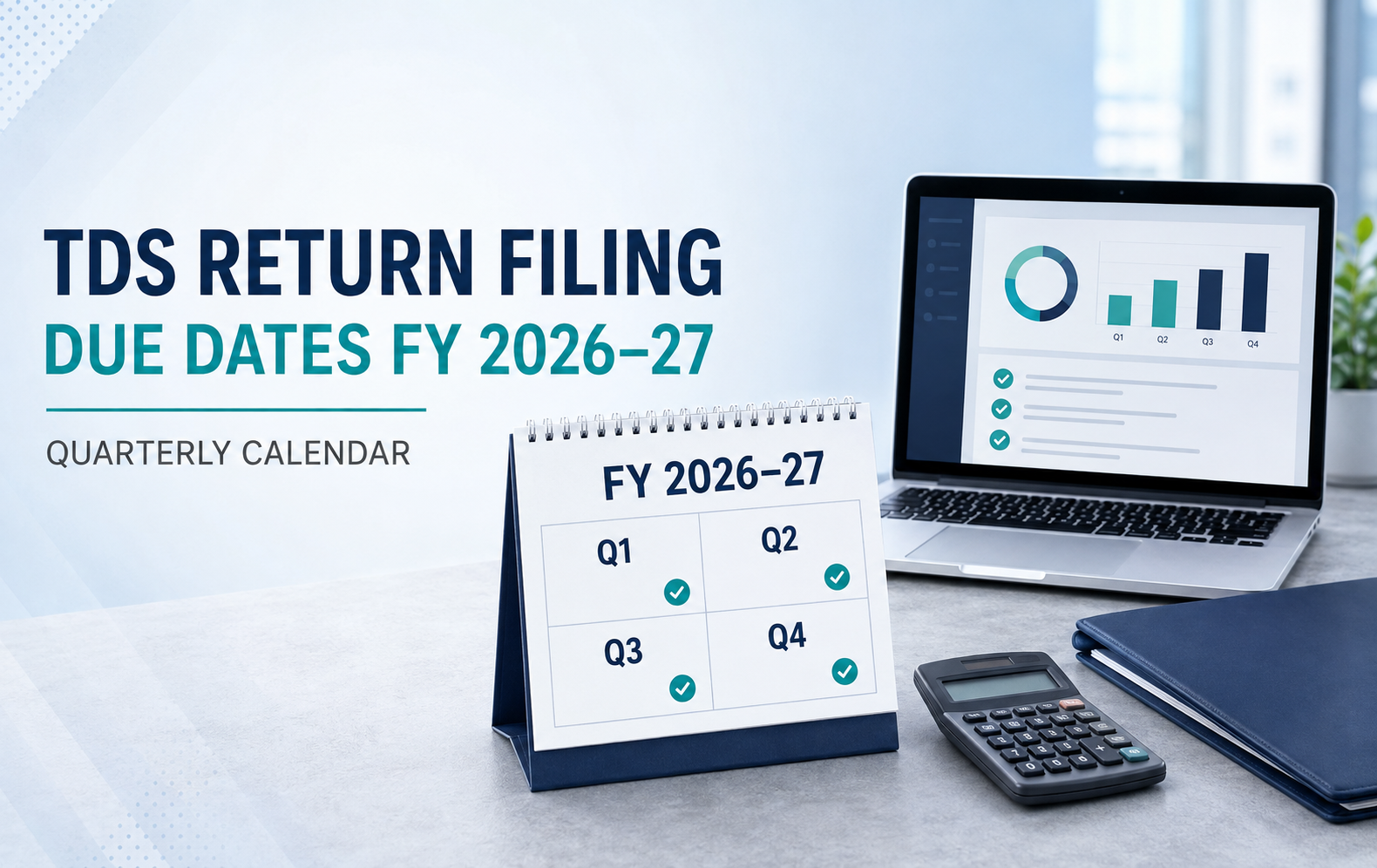
Timely compliance depends heavily on knowing the correct TDS return due date for each quarter. Here is the standard schedule:
|
Quarter |
Period |
TDS Return Due Date |
|
Q1 |
April – June |
31st July |
|
Q2 |
July – September |
31st October |
|
Q3 |
October – December |
31st January |
|
Q4 |
January – March |
31st May |
It's important to note that the government occasionally extends the TDS return due date due to technical glitches on the portal or other administrative reasons, so deductors should always check the official Income Tax e-filing website or TRACES portal for the latest updates before the deadline approaches.
Missing the TDS return due date doesn't just attract a penalty — it can also delay the deductee's ability to claim TDS credit, creating unnecessary friction in their tax filing process.
Step-by-Step Process for TDS Return Filing
- Collect Data: Gather details of all deductees, PANs, amounts paid, and TDS deducted for the quarter.
- Deposit TDS: Ensure that TDS deducted is deposited with the government using Challan ITNS 281 before preparing the return.
- Prepare the Return: Use the Return Preparation Utility (RPU) provided by NSDL/Protean to prepare the statement in the applicable form — Form 24Q, 26Q, 27Q, or 27EQ.
- Validate the File: Run the File Validation Utility (FVU) to check for errors before submission.
- Submit Online: Upload the validated file on the TRACES or Income Tax e-filing portal using a valid digital signature or electronic verification code.
- Download the Acknowledgment: Once submitted successfully, download the acknowledgment receipt (Token Number) for future reference.
Following this process carefully ensures smooth TDS return filing without technical rejections.
TDS Late Filing Penalty
Delaying your TDS return filing comes at a real cost. The TDS late filing penalty is levied under Section 234E, which requires the deductor to pay ₹200 per day of delay until the return is filed. This penalty is calculated separately for each day of default and cannot exceed the total amount of TDS deducted for that quarter.
In addition to the late filing fee, Section 271H allows the tax department to impose an additional penalty ranging from ₹10,000 to ₹1,00,000 if the return is not filed within one year of the due date, or if incorrect details such as PAN or challan information are furnished. This penalty is separate from the daily fee under Section 234E and can apply even after the daily fee has been paid.
To avoid this TDS late filing penalty, deductors should mark their calendars well in advance and complete TDS return filing before the deadline, rather than waiting until the last date. Many businesses and individuals also rely on online tax return filing services to streamline the filing process, ensure timely compliance, and minimize the risk of penalties due to missed deadlines or filing errors.
TDS Correction Return: Fixing Errors After Filing
Even after careful preparation, errors can creep into a TDS statement — a wrong PAN, incorrect challan details, mismatched amounts, or a missing deductee entry. This is where a TDS correction return becomes necessary.
A TDS correction return allows the deductor to revise a previously filed statement without having to file a completely fresh return. Common reasons for filing a TDS correction return include:
- Incorrect PAN of the deductee
- Wrong TDS amount reported
- Incorrect challan details (BSR code, deposit date, or amount)
- Missing or duplicate deductee records
- Change in the section under which TDS was deducted
How to File a TDS Correction Return
- Download the consolidated (conso) file for the relevant quarter from the TRACES portal.
- Open the conso file in the RPU and make the necessary corrections — this could be a PAN correction, challan correction, or addition/deletion of deductee rows.
- Validate the corrected file using the FVU.
- Submit the corrected statement through TRACES or the e-filing portal, just like the original TDS return filing.
- Once processed, the corrected details will reflect in Form 26AS and Form 16/16A of the concerned deductee.
It's worth noting that a PAN correction in a TDS correction return can only be done a limited number of times, so accuracy at the time of original TDS return filing is always the better approach.
Best Practices for Smooth TDS Return Filing
- Verify PAN details of all deductees before filing to avoid future correction requests.
- Reconcile challan payments with the return before submission.
- Keep track of the TDS return due date for each quarter using a compliance calendar.
- Avoid last-minute filing to reduce the risk of portal errors or last-day technical issues.
- Cross-check Form 24Q filing and Form 26Q filing figures against your books of accounts before submission.
- Retain acknowledgment receipts and conso files for at least six years for audit purposes.
Conclusion
TDS return filing is a recurring compliance responsibility that demands accuracy, timeliness, and attention to detail. Whether you're handling Form 24Q filing for employee salaries or Form 26Q filing for vendor and professional payments, staying on top of the TDS return due date is essential to avoid the TDS late filing penalty. Businesses, employers, and even NRIs managing tax obligations in India can benefit from professional guidance, and consulting an experienced NRI tax consultant India can help ensure accurate TDS compliance, timely filings, and adherence to the latest tax regulations.
And if errors do occur, a properly filed TDS correction return can set things right without major disruption. By building a disciplined quarterly process around TDS return filing, businesses can stay compliant, avoid penalties, and ensure their deductees receive accurate tax credit without unnecessary hassle. Read more the Complete Guide to understand the filing process.
Need Help with Your TDS Compliance?
Ensure your tax statements are prepared accurately and submitted on time with professional assistance. From filing and error correction to compliance support, get reliable guidance to manage your tax responsibilities smoothly and avoid unnecessary delays or issues.
Call Us: +91 63669 09909
Email: contact@taxfilr.com
Frequently Asked Questions
1. Who is responsible for deducting tax at source?
Any person or entity covered under the Income-tax Act, such as employers, companies, partnership firms, government departments, and certain businesses, may be required to deduct tax from specified payments before making them to the recipient.
2. What happens if incorrect PAN details are reported?
Incorrect PAN information can lead to mismatches in tax records, delays in credit to the recipient, and notices from the tax authorities. It is advisable to verify PAN details before submitting any statement.
3. Can a filed statement be revised later?
Yes. If errors are discovered after submission, a revised statement can generally be submitted to update incorrect information such as PAN, challan details, payment amounts, or deductee records.
4. Why is quarterly compliance important for businesses?
Quarterly compliance helps maintain accurate tax records, ensures timely credit to recipients, reduces reconciliation issues, and minimizes the chances of penalties or departmental notices.
5. What records should be maintained for smooth tax compliance?
Businesses should maintain payment vouchers, invoices, salary records, challan details, PAN information, bank payment proofs, and reconciliation statements to support accurate reporting and future audits.
6. How can organizations reduce errors in tax reporting?
Organizations can reduce errors by reconciling accounts regularly, validating payment and challan information, verifying recipient details, and reviewing all entries carefully before submission.