

With the Income Tax Act, 2025, the familiar Form 26Q has been replaced by Form 140 for reporting TDS deducted on non-salary payments made to residents. Form 140 filing is a quarterly compliance requirement for deductors who are required to deduct tax at source from applicable payments such as professional fees, commission, brokerage, rent, and certain contractual payments.
Understanding the new form is important because incorrect PAN details, mismatched challans, wrong payment classifications, or missed deadlines can create TDS reconciliation issues. This guide explains who needs to file Form 140, the applicable deadlines, the filing process, common mistakes, and practical points taxpayers and deductors should keep in mind for online TDS return filing.
What Is Form 140?
Form 140 is a quarterly TDS statement for non-salary payments made to residents. It is the new-form equivalent of Form 26Q under the Income Tax Act, 2025. It is used to report details of tax deducted at source on applicable resident payments and the related TDS deposits.
The form can apply to various deductors, including:
- Companies
- Firms and partnerships
- Government bodies
- Other persons required to deduct TDS under the applicable provisions
Payments covered can include professional fees, commission, brokerage, rent, contractual payments, and other specified non-salary payments where TDS is applicable.
Form 140 is therefore not an income-tax return filed by the recipient of income. It is a TDS statement filed by the person responsible for deducting and reporting the tax.
How Is Form 140 Different From the Earlier Form 26Q?
The earlier Form 26Q was used under the Income Tax Act, 1961 to report TDS on payments other than salary made to residents. Under the new Income Tax Act, 2025, Form 140 serves the corresponding purpose. The official mapping guide identifies Form 140 as the successor to Form 26Q for quarterly non-salary TDS reporting.
|
Particular |
Earlier Form 26Q |
Form 140 |
|
Applicable law |
Income Tax Act, 1961 |
Income Tax Act, 2025 |
|
Main purpose |
TDS reporting |
TDS reporting |
|
Payment type |
Non-salary payments to residents |
Non-salary payments to residents |
|
Frequency |
Quarterly |
Quarterly |
|
Recipient category |
Residents |
Residents |
|
Current status |
Earlier form |
Applicable new form |
The change is primarily part of the transition to the new tax-law framework. Businesses should therefore update their compliance processes, accounting systems, templates, and internal checklists accordingly.
Who Needs to File Form 140?
Any person required to deduct TDS on applicable non-salary payments made to residents may need to submit the quarterly statement.
For example, a business that deducts TDS from payments to a resident professional or contractor may have reporting obligations. Similarly, applicable payments involving rent, commission, brokerage, or other covered categories may need to be reported.
The key point is that TDS applicability should be determined before deciding whether the quarterly statement is required. The nature of the payment, recipient status, applicable provision, threshold, rate, and other conditions should be checked before filing.
What Is the Form 140 Due Date?
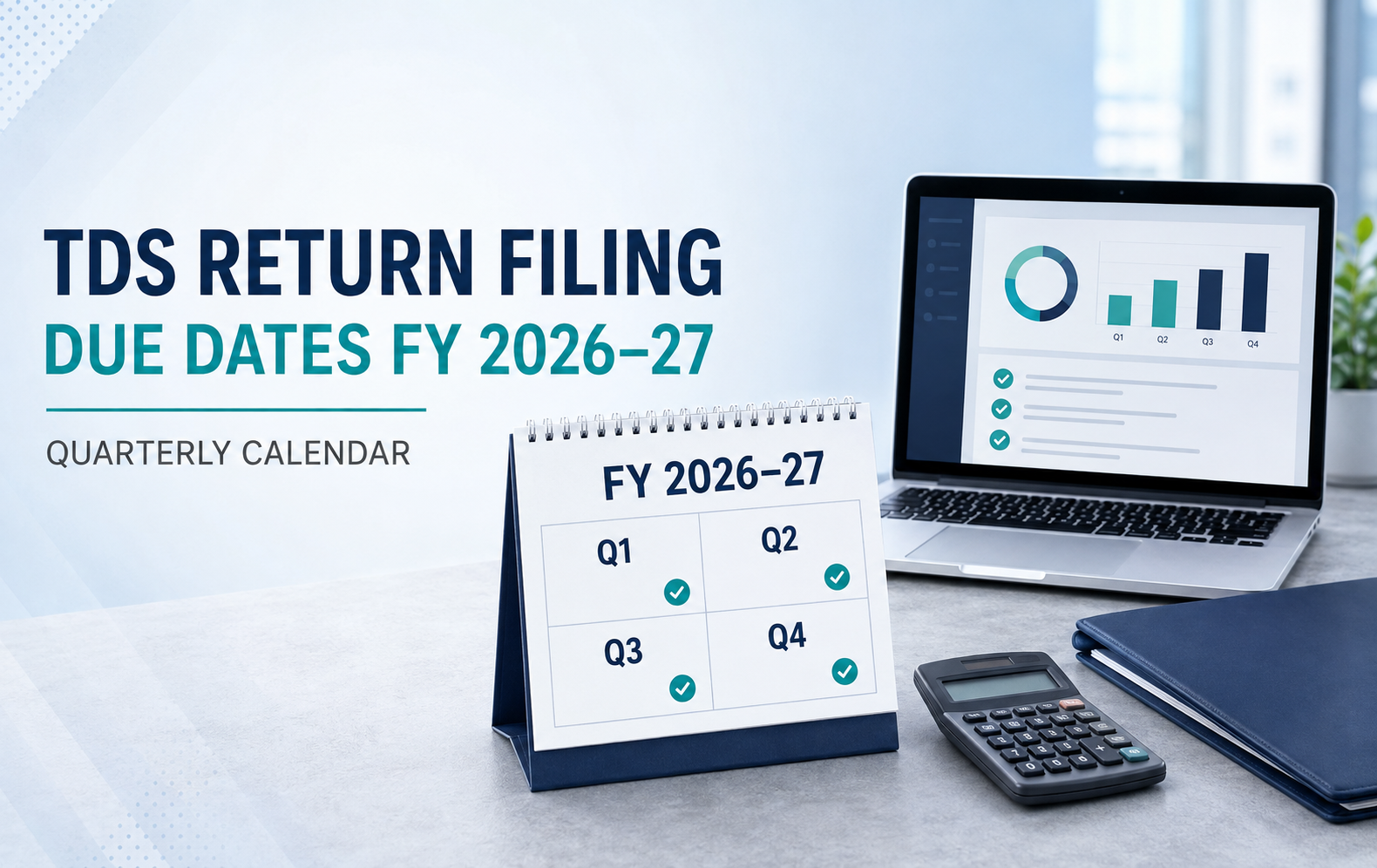
The Form 140 due date is prescribed quarterly. According to the Income Tax Department's current Form 140 guidance, the deadlines are:
|
Quarter |
Period Covered |
Form 140 Due Date |
|
Q1 |
April–June |
31 July |
|
Q2 |
July–September |
31 October |
|
Q3 |
October–December |
31 January |
|
Q4 |
January–March |
31 May of the following financial year |
For example, TDS transactions falling in the April–June quarter are generally reported by 31 July.
Remember that TDS deposit deadlines and TDS statement filing deadlines are different compliance requirements. TDS generally has to be deposited within the prescribed timeline, while Form 140 is the quarterly statement reporting the relevant deduction details. The Income Tax Department states that the general TDS deposit timeline continues under the rules, with specific exceptions.
What Information Is Required for Form 140 Filing?
Accurate data preparation is one of the most important parts of Form 140 filing. The information should agree with the deductor's accounting records, TDS challans, and deductee details.
Common information includes:
- Deductor and TAN details
- Relevant tax year and quarter
- PAN details of deductees
- Nature of payment
- Amount paid or credited
- TDS amount deducted
- Applicable TDS information
- Challan and tax-payment details
- Details required for reporting and reconciliation
The exact data fields and validation requirements should be checked against the latest filing utility and instructions before submission.
How to File Form 140 Step by Step
The Income Tax Department's current user manual provides a process involving the Return Preparation Utility (RPU), File Validation Utility (FVU), and e-Filing portal.
Step 1: Collect TDS and Payment Records
Start by gathering invoices, payment records, deductee PANs, TDS deductions, challans, and accounting data for the relevant quarter.
Step 2: Prepare the Statement
Use the updated Return Preparation Utility available through the prescribed channel and enter the required deductor, deductee, transaction, and TDS information.
Step 3: Validate the Data
Review the statement for PAN errors, incorrect amounts, missing information, and inconsistencies. Generate the required FVU file after successful validation.
Step 4: Prepare the Upload File
The validated file needs to be prepared in the format prescribed for electronic submission.
Step 5: Log In to the Income Tax e-Filing Portal
The Income Tax Department's Form 140 manual instructs users to log in using the TAN and navigate to the applicable TDS/TCS filing section.
Step 6: Submit and Verify
Upload the required file and complete the applicable verification or authentication process. Keep the acknowledgement and supporting records for future reconciliation.
What Are the Common Errors in Form 140 Filing?
Errors in a quarterly TDS statement can lead to mismatches or correction requirements. Common issues include:
- Incorrect or invalid PAN
- Wrong deductee details
- Incorrect TDS amount
- Mismatch between challan and statement
- Incorrect payment classification
- Missing transactions
- Duplicate reporting
- Incorrect quarter or tax year
- Failure to reconcile books with TDS records
- Using outdated filing utilities
A good practice is to reconcile the TDS ledger with accounting records and challan information before submitting the return.
How Does TDS on Non-Salary Payments Affect Compliance?
TDS on non-salary payments requires businesses to manage two connected responsibilities: deducting the appropriate tax when applicable and accurately reporting the deduction.
A simple compliance workflow can be:
Payment identified → TDS applicability checked → TDS deducted → Tax deposited → Form 140 prepared → Data validated → Statement filed → Records reconciled
This approach helps reduce last-minute corrections and makes quarterly compliance easier to manage.
What Happens If the Statement Contains Errors?
If submitted information contains an error, the deductor may need to file a correction statement through the applicable process. Corrections can become necessary for issues such as incorrect PAN, wrong deduction amounts, challan mismatches, or inaccurate transaction information. For complex cases, an Income tax consultant online can help review the details and guide the correction process.
The Income Tax Department has also indicated that TDS/TCS correction functionality for Tax Year 2026–27 is being enabled in stages on the e-Filing portal.
The best approach is to identify discrepancies during internal reconciliation rather than waiting for a mismatch to appear later.
Practical Tips for Better Form 140 Compliance
Businesses can make their quarterly process more reliable by following a few simple practices:
- Maintain updated PAN records for every deductee.
- Reconcile TDS ledgers monthly, rather than waiting until the quarterly deadline.
- Match challans with accounting records before preparing the statement.
- Use the latest prescribed utility and filing instructions.
- Review payment classifications carefully before reporting them.
- Track quarterly deadlines through an internal compliance calendar.
- Keep acknowledgements and supporting documents after submission.
- Review corrections promptly when a mismatch is identified.
These steps are particularly useful for businesses handling a large number of vendors, professionals, contractors, or recurring payments.
Form 140 vs Form 138 vs Form 144
The new forms should not be confused with one another.
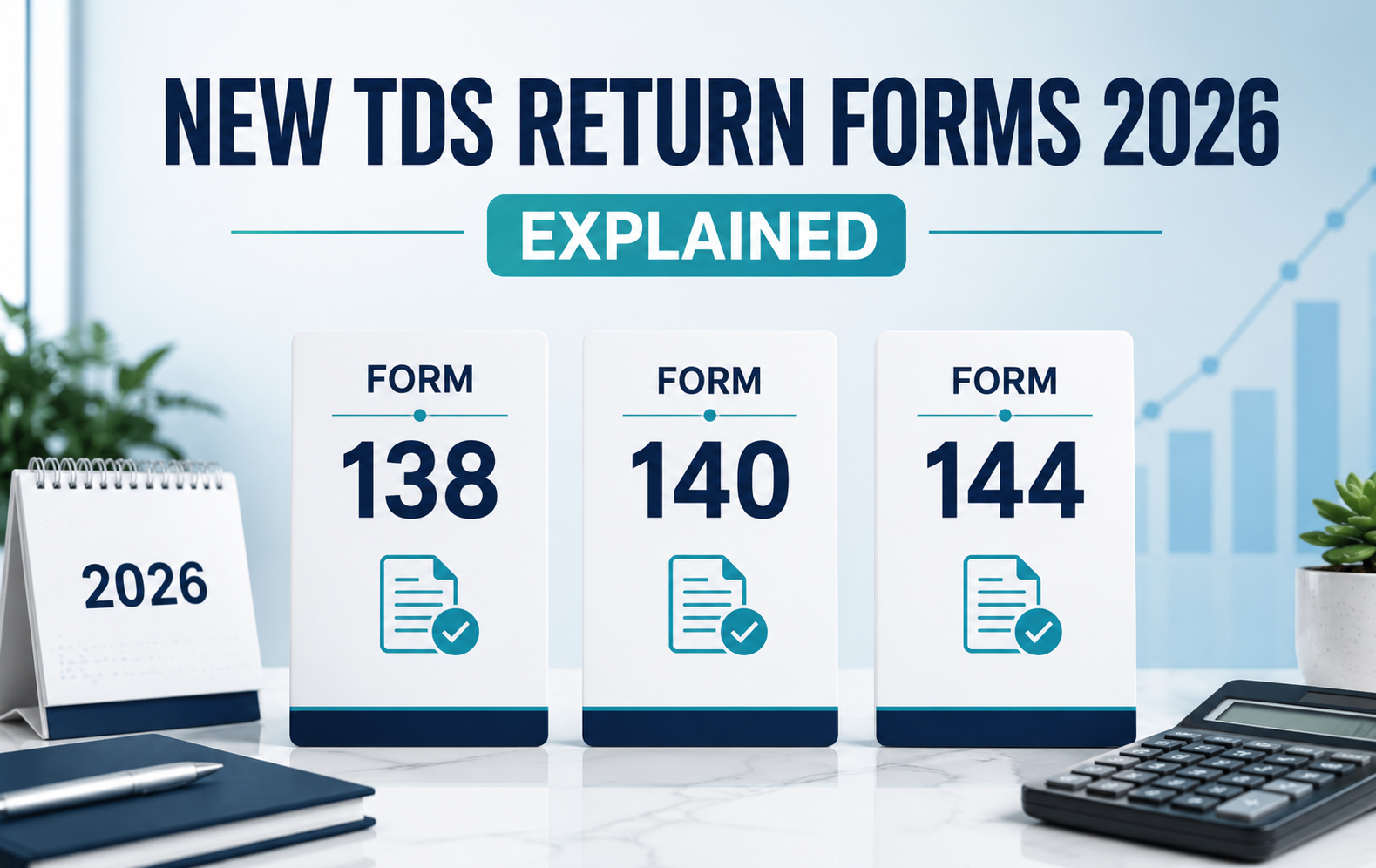
- Form 138: Quarterly TDS statement relating to salary, pension, or specified senior-citizen interest cases; it corresponds to the earlier Form 24Q.
- Form 140: Quarterly TDS statement for payments other than salary made to residents; it corresponds to the earlier Form 26Q.
- Form 144: Quarterly TDS statement for payments other than salary made to non-residents; it corresponds to the earlier Form 27Q.
This distinction is useful when deciding which return applies to a particular transaction.
Is Form 140 the Same as a Quarterly Non-Salary TDS Return?
Yes. In practical terms, Form 140 is the new quarterly non-salary TDS return/statement used for applicable TDS deducted on payments other than salary made to residents under the new tax-law framework. It replaces the corresponding reporting function previously handled through Form 26Q. Taxpayers may also consider professional tax return preparation services for accurate compliance.
The important distinction is between resident and non-resident recipients. Payments other than salary to non-residents fall under Form 144 rather than Form 140.
Conclusion
Form 140 filing is an important quarterly TDS compliance requirement for applicable non-salary payments made to residents under the Income Tax Act, 2025. Since it replaces the earlier Form 26Q, businesses should update their TDS workflows and ensure that payment, PAN, deduction, challan, and accounting records remain properly reconciled.
Keeping track of each Form 140 due date, using the latest filing utility, and reviewing transaction data before submission can make quarterly compliance significantly smoother. For businesses that handle multiple vendors or frequent TDS deductions, professional assistance from Taxfilr can help streamline preparation, reconciliation, and filing while reducing avoidable compliance errors. Learn more about Form 140 filing requirements, deadlines, and compliance support to stay updated and file accurately.
Simplify Your Form 140 Filing with Taxfilr
Stay on top of quarterly TDS compliance with Taxfilr. Get professional support for Form 140 preparation, data reconciliation, error checks, and timely filing. Contact our team to make your non-salary TDS compliance simpler and more organized.
Call us: +91 63669 09909
Email: contact@taxfilr.com
Frequently Asked Questions
What is Form 140 used for?
Form 140 is used to report quarterly TDS deducted on applicable non-salary payments made to residents. It is the new equivalent of Form 26Q under the Income Tax Act, 2025. The statement includes relevant deductor, deductee, transaction, deduction, and tax-payment information.
Has Form 26Q been replaced by Form 140?
Yes. Under the new Income Tax Act, 2025, Form 140 corresponds to the earlier Form 26Q for quarterly reporting of TDS on payments other than salary made to residents. The Income Tax Department's official form-mapping guide confirms this transition.
What is the due date for Form 140?
The quarterly deadlines are 31 July for April–June, 31 October for July–September, 31 January for October–December, and 31 May of the following financial year for January–March.
Is Form 140 applicable to salary TDS?
No. Form 140 is for applicable non-salary payments made to residents. Salary-related quarterly reporting falls under Form 138 under the new framework, corresponding to the earlier Form 24Q.
Is Form 140 applicable to payments made to non-residents?
No. Form 144 is used for quarterly TDS reporting on payments other than salary made to non-residents. Form 140 applies to the corresponding resident-payment category.
Does filing Form 140 replace depositing TDS?
No. TDS deduction, deposit, and quarterly statement filing are separate compliance steps. A deductor must deposit deducted tax within the applicable timeline and separately report the relevant transactions through the prescribed quarterly statement.
What should businesses do before submitting the statement?
Businesses should reconcile their TDS ledger, challans, invoices, payment records, deductee PANs, and accounting data. They should also use the latest prescribed utility and validate the statement before submission to reduce the risk of errors or correction requirements.