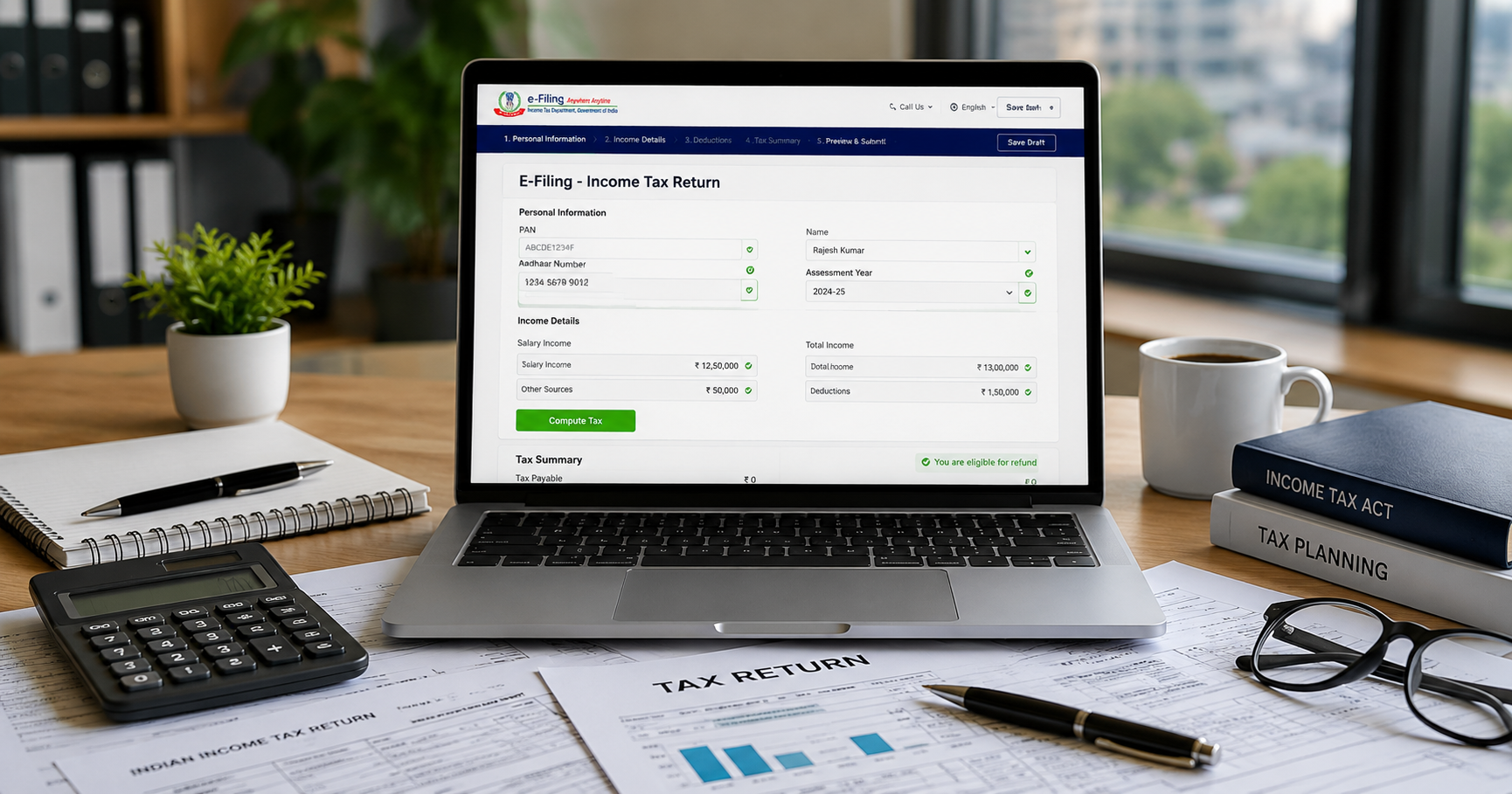



Filing an income tax return can look routine until your own paperwork appears. A salaried employee may have Form 16, bank interest, and a job switch. A freelancer may have invoices, platform payouts, and TDS from only some clients. A business owner may need to connect books, turnover, and return selection. That is why online itr filing services are useful: they add structure before the taxpayer clicks submit.
Why Guided Filing Matters in Online Income Tax Returns
India’s e-filing system has made return submission more accessible, but the work still involves choosing the relevant return route, checking pre-filled information, validating entries, and verifying the filed return. The Income Tax Department’s guidance asks taxpayers to preview, validate, calculate, and complete verification rather than treating submission as a single-click task. payers face different friction. Salaried individuals compare payroll data with other income. Freelancers need the year’s receipts in one clear view. Business owners need records that support the numbers reported.
Salaried Employees: Small Gaps That Create Big Errors
For many salaried taxpayers, Form 16 is the starting point, not the whole return. Interest income, rent, capital gains, or salary from a previous employer can still affect what must be reported. The department’s AY 2026–27 guidance separates salaried return eligibility by income type and conditions. income tax filing services often help most. They encourage taxpayers to compare Form 16 with Annual Information Statement data, tax credit details, and personal records before filing. That review can catch omissions that are easy to miss when someone assumes payroll documents tell the entire story. laried filing checks
Salary returns tend to go wrong for ordinary reasons. A joining bonus may be overlooked, a previous employer’s salary may be left out, or bank interest may not be included. Some people copy deduction assumptions from payroll even when final documents tell a different story.
Practical online itr filing services slow the process down at these points. They make the taxpayer revisit income totals, TDS credits, and bank details before submission. That does not make filing complicated; it makes the return easier to trust.
Freelancers: Why Organized Records Matter More Than Speed
Freelancers rarely receive one annual statement that captures everything. Income may come from retainers, assignments, platforms, consulting projects, or foreign clients. Some clients deduct TDS, some do not. Expense records may sit across invoices, subscriptions, and bank statements.
The department’s guidance for individuals with business or professional interests often find that working with an income tax consultant online helps them structure their income correctly before filing, especially when multiple clients and payment channels are involved.
A freelancer example
Imagine a designer paid by four Indian clients, one overseas client, and a marketplace platform. Two Indian clients deduct TDS. The others do not. Without a proper review, the designer may understate gross receipts or miss tax credits that already appear in department records. line itr filing services help organize that picture before submission. They are useful when personal and professional spending overlap, because the return should rest on supportable records rather than rushed year-end memory.
Business owners: Start With Records, Not the Filing Portal
Small business owners think about customers, suppliers, collections, and cash flow long before return schedules. By filing season, questions appear quickly: Does turnover match records? Are expenses grouped consistently? Do tax credits line up with statements?
The Income Tax Department’s guidance for business and professional taxpayers explains return applicability for business income, while its ITR-4 materials describe the context for eligible presumptive filers. That distinction matters because a business return is built around a different income structure from a simple salary return. rs and small operators, income tax return filing online feels smooth when the groundwork is already done. It becomes stressful when turnover, deductions, and credits are reconstructed too late.
Where business filers need attention
Owners may need to review debtor collections, vendor payments, cash entries, tax certificates, and the relationship between books and reported totals. The Annual Information Statement can also show tax-related data worth comparing against internal records before filing. line itr filing services help translate that operating reality into a cleaner compliance process. They do not replace books or judgment. They reduce the gap between what happened in the year, what appears in statements, and what the return finally reports.
What to prepare before filing
Preparation depends on the taxpayer. Salaried individuals may begin with Form 16, interest information, and deduction support. Freelancers may gather invoices, receipt summaries, TDS certificates, and expense records. Business owners may organize financial statements and supporting tax records.
The principle stays the same: collect source documents, compare them with pre-filled data, then prepare the return. Online tax return filing services work best when the taxpayer arrives with orderly records instead of expecting the portal to solve missing information. ong filing service should do
A good filing experience should feel guided, not rushed. It should identify the taxpayer category, request relevant documents, flag inconsistencies, and explain when a number needs confirmation. People value speed, but trust usually comes from clarity.
Strong tax return services also communicate limits. They should not encourage unsupported claims, promise unrealistic refunds, or reduce business income to a generic template. A good service leaves the taxpayer better informed, not just finished.
Choosing the right support
The right level of help depends on complexity. Someone with one employer may need a lighter review. A consultant with many payers or a shop owner with varied receipts may need deeper checking. Price matters, but so do sensible questions.
A transparent provider of online itr filing services should explain document needs, keep the taxpayer involved, and make the workflow easier to follow. Filing should become more understandable, not disappear into a black box.
Conclusion
This annual ritual goes beyond a mere tax return. The tax return is a precise reflection of the earnings, tax credits, deductions, and the filing method. Salaried employees will find they have more reconciliations than the pay stubs; the self-employed need to track their receipts in an organized manner, and business people need documents that do not contradict each other. This is where careful selection of online itr filing services is very useful. The process should be structured while maintaining its simplicity, and the best advice is to conduct another review at the end. The smart strategy here would be to accumulate the necessary documents at an earlier stage, choose the most appropriate filing procedure depending on the income level, make an accurate comparison between important numbers, and finish up in good time.
Learn more about online ITR filing services, understand tax return requirements, explore filing options, and access helpful guidance.
Frequently Asked Questions
1. Who benefits most from guided ITR support?
People with salary income, freelance receipts, business income, multiple employers, house property details, or tax credits that need checking often benefit. Guidance is also helpful when someone wants reassurance that documents and return entries align before submission.
2. Is Form 16 enough for a salaried person?
Not always. Form 16 is central for salary income, but interest, capital gains, rent, or pay from a previous employer may require separate review. A complete return should reflect relevant income and tax information beyond payroll records.
3. Can freelancers rely on filing support?
Yes. online itr filing services can help freelancers organize receipts from multiple clients, review TDS visibility, and reduce mistakes caused by scattered invoices or late-year guesswork. The service is most useful when records are gathered before filing begins.
4. Why do business owners need more preparation?
Business returns depend on records, not memory. Owners may need to review turnover, expenses, deductions, TDS details, and the return form that fits their facts. Early preparation makes the filing process clearer and reduces last-minute corrections with fewer surprises.
5. What should I check before submitting my return?
Review personal details, income totals, tax credits, deduction claims, refund or tax payable figures, and bank information. Then preview the return carefully and complete verification after filing so the submission process is properly concluded without loose ends.