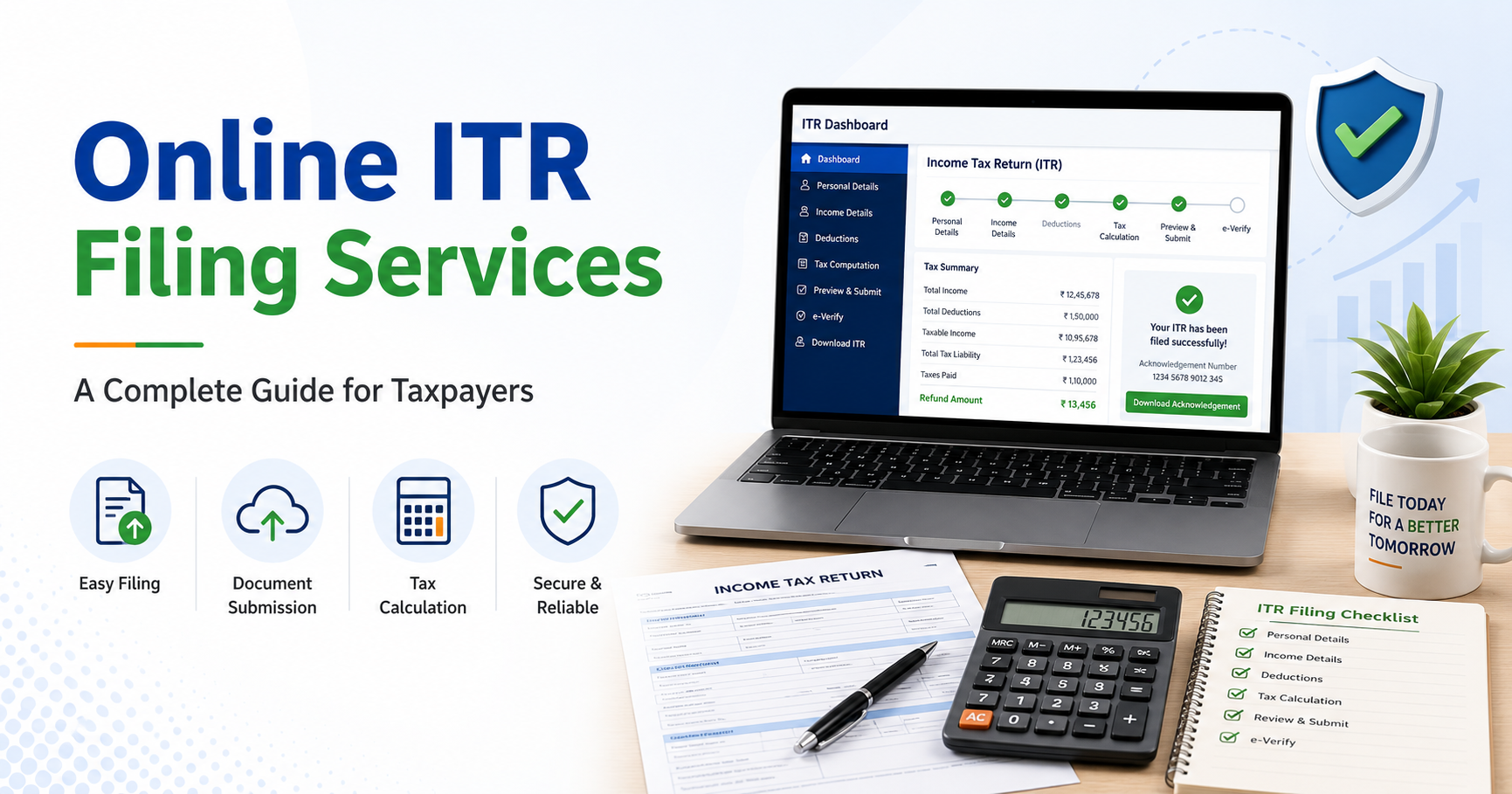



Filing your income tax return is an important financial responsibility, but many taxpayers get confused before they even begin the process. The most common question is: which ITR form should I file? Since the Income Tax Department provides multiple return forms for different categories of taxpayers, selecting the right one is essential for accurate filing and smooth processing.
Whether you are a salaried employee, investor, freelancer, consultant, or business owner, the return form you choose depends on your sources of income. Filing the wrong form can lead to processing delays, correction requests, or even notices from the tax department. While some taxpayers prefer filing returns independently, others seek guidance from an income tax filing agent to ensure they select the correct form and comply with tax regulations.
In this guide, we explain the differences between ITR-1, ITR-2, ITR-3, and ITR-4 so you can confidently determine which ITR form should I file based on your financial profile.
Why Choosing the Correct ITR Form Matters
India's tax system offers different income tax return forms India taxpayers can use according to their income type and tax status. Each form is designed to capture specific financial information.
Choosing the correct return form helps:
- Ensure accurate tax reporting
- Reduce the risk of notices
- Speed up return processing
- Avoid unnecessary revisions
- Maintain tax compliance
Before filing your return, understanding which ITR form should I file can save time and prevent costly mistakes.
Overview of Common ITR Forms
Most individual taxpayers generally file one of the following forms:
- ITR-1
- ITR-2
- ITR-3
- ITR-4
The right form depends on the nature of your income rather than the amount of tax you pay.
ITR-1: For Individuals with Simple Income Sources
ITR-1, also known as Sahaj, is generally meant for resident individuals who earn income from salary, pension, one house property, and other basic sources such as bank interest.
This is often considered the simplest return form available and is commonly used by taxpayers with straightforward financial situations.
Who Can Use ITR-1?
ITR-1 is typically suitable for:
- Salaried employees
- Pensioners
- Individuals earning interest income
- Taxpayers with one house property
- Residents with uncomplicated income structures
Because of its simplicity, it is widely recognized as the preferred ITR form for salaried employee taxpayers whose income comes mainly from salary and interest earnings.
When ITR-1 Cannot Be Used
You may not be eligible for ITR-1 if you have:
- Capital gains income
- Foreign assets
- Foreign income
- Business or professional income
- Certain complex financial transactions
For many taxpayers with only salary-related income, the answer to which ITR form should I file is often ITR-1.
ITR-2: For Investors and Taxpayers with Additional Income Sources
ITR-2 is designed for individuals and Hindu Undivided Families (HUFs) who do not earn income from business or profession but have more complex financial activities.
This form is commonly used by individuals who earn capital gains from investments, own multiple properties, or hold foreign assets. Many taxpayers who actively invest in stocks, mutual funds, or real estate often use online tax return filing services to accurately report these transactions and ensure compliance with tax regulations.
Who Should File ITR-2?
ITR-2 may be suitable for taxpayers who have:
- Salary income
- Pension income
- Capital gains from shares or mutual funds
- Income from multiple house properties
- Foreign assets
- Foreign income
When comparing ITR 1 vs ITR 2, the biggest distinction is that ITR-2 allows reporting of capital gains and foreign asset information, while ITR-1 does not.
Example
Suppose an employee earns salary income and sells mutual funds during the financial year. Even though salary remains the primary source of income, the capital gains transaction may require filing ITR-2.
This highlights why reviewing all income sources is essential before deciding which ITR form should I file.
ITR-3: For Business Owners and Professionals
ITR-3 is intended for individuals and HUFs earning income from business or profession. It is a comprehensive return form that enables taxpayers to report business-related financial information and maintain detailed records of income and expenses.
Who Usually Files ITR-3?
ITR-3 is commonly used by:
- Proprietorship business owners
- Consultants
- Doctors
- Lawyers
- Architects
- Chartered accountants
- Traders
- Self-employed professionals
It is also one of the most common options as an ITR form for freelancers who maintain proper books of accounts and report actual business income.
Features of ITR-3
ITR-3 allows reporting of:
- Business income
- Professional income
- Capital gains
- House property income
- Salary income
- Other sources of income
If you run a business or provide professional services, the answer to which ITR form should I file often points toward ITR-3.
ITR-4: For Presumptive Taxation Scheme Users
ITR-4 is designed for eligible small businesses and professionals who opt for presumptive taxation under the Income Tax Act.
Instead of maintaining detailed books of accounts and calculating actual profits, eligible taxpayers can declare income using prescribed presumptive taxation provisions.
Who Can File ITR-4?
ITR-4 is generally suitable for:
- Small business owners
- Certain professionals
- Presumptive taxation scheme users
- Eligible individual taxpayers seeking simplified compliance
Benefits of ITR-4
Some key advantages include:
- Simplified return filing
- Reduced compliance burden
- Minimal bookkeeping requirements
- Faster filing process
Many taxpayers using online itr filing services find ITR-4 convenient because of its straightforward structure.
ITR 3 vs ITR 4: Understanding the Difference
One of the most common points of confusion among business owners is ITR 3 vs ITR 4.
Although both forms are meant for taxpayers earning business or professional income, the key difference lies in how income is calculated.
ITR-3
ITR-3 is suitable for taxpayers who:
- Maintain books of accounts
- Report actual profits and expenses
- Have detailed business records
ITR-4
ITR-4 is generally suitable for taxpayers who:
- Choose presumptive taxation
- Prefer simplified compliance
- Meet prescribed eligibility conditions
For example, a consultant maintaining complete accounting records may choose ITR-3, while an eligible professional opting for presumptive taxation may use ITR-4 instead.
How to Decide Which ITR Form Is Right for You
The easiest way to determine which ITR form should I file is by identifying the source of your income.
Consider the following approach:
- Salary and basic income only → ITR-1
- Salary plus capital gains or foreign assets → ITR-2
- Business or professional income with books of accounts → ITR-3
- Presumptive taxation scheme users → ITR-4
A clear understanding of your income profile can help answer which ITR form should I file without confusion.
Common Mistakes Taxpayers Should Avoid
Many taxpayers focus only on their primary source of income and overlook additional financial transactions.
Some common filing mistakes include:
- Selecting ITR-1 despite having capital gains
- Ignoring interest income
- Failing to disclose foreign assets
- Filing the wrong business return
- Using presumptive taxation without eligibility
Avoiding these mistakes can improve filing accuracy and reduce compliance issues.
Should You Take Professional Assistance?
While tax filing has become more convenient through digital platforms, taxpayers with multiple income streams may benefit from professional support.
An experienced income tax filing agent can help identify the appropriate return form and review financial information before submission.
Additionally, many digital tax platforms provide guided filing assistance that simplifies the process for individuals and business owners.
For taxpayers dealing with complex income structures, professional tax consultation can help ensure accurate compliance and minimize filing errors.
Conclusion
Choosing the correct ITR form is one of the most important steps in the tax filing process. Filing the right return ensures smooth processing, accurate reporting, and compliance with tax regulations.
If you are wondering which ITR form should I file, start by evaluating your income sources carefully. ITR-1 is generally suitable for simple salary income, ITR-2 is often required for capital gains and foreign assets, ITR-3 serves business owners and professionals, and ITR-4 supports eligible taxpayers opting for presumptive taxation.
Understanding these differences can help you make an informed decision, avoid common mistakes, and complete your tax filing with confidence. Learn more about ITR eligibility requirements and filing rules before submitting your return.
Need Help Choosing the Right ITR Form?
Selecting the correct ITR form can be confusing, especially when you have multiple income sources, investments, business income, or professional earnings. Whether you are filing your return for the first time or looking for expert guidance, TaxFilr can help simplify the process. Get professional assistance to identify the right return form, avoid common filing mistakes, and complete your tax filing accurately and on time.
Call: +91-6366 909 909
Email: contact@taxfilr.com
Frequently Asked Questions
1. Can a salaried person file ITR-1?
Yes, a salaried resident individual may file ITR-1 if the income profile fits the allowed conditions. Salary alone is not the only test. House property income, capital gains, foreign assets, directorship, and total income level can change the applicable form.
2. Which form should I use if I have capital gains?
If you have capital gains from shares, mutual funds, property, or other assets, ITR-2 is commonly used when there is no business or professional income. If capital gains exist alongside business income, ITR-3 may become applicable instead.
3. Can freelancers file ITR-4?
Freelancers can file ITR-4 only if they qualify for presumptive taxation and meet the form’s eligibility conditions. If they maintain detailed books, have ineligible capital gains, foreign assets, or do not meet the presumptive rules, ITR-3 may be needed.
4. Is ITR-3 only for business owners?
No. ITR-3 is for individuals and HUFs with income from business or profession, but it can also include salary, house property, capital gains, and other sources. It is suitable when the return needs detailed business or professional reporting.
5. How do I avoid choosing the wrong ITR form?
To avoid mistakes, review every income source, check residential status, and confirm whether any special condition blocks a simple form. The best answer to which ITR form should I file comes from matching your full income profile with form eligibility.