

Filing your Income Tax Return (ITR) on time is always the best approach. However, taxpayers sometimes miss the due date, discover mistakes in an already filed return, or realize later that they forgot to report certain income. The Income Tax Department provides different provisions to deal with each of these situations.
Understanding the belated vs revised ITR concept is important because each return serves a different purpose and follows different rules. Choosing the wrong option can lead to unnecessary penalties, delayed refunds, or compliance issues.
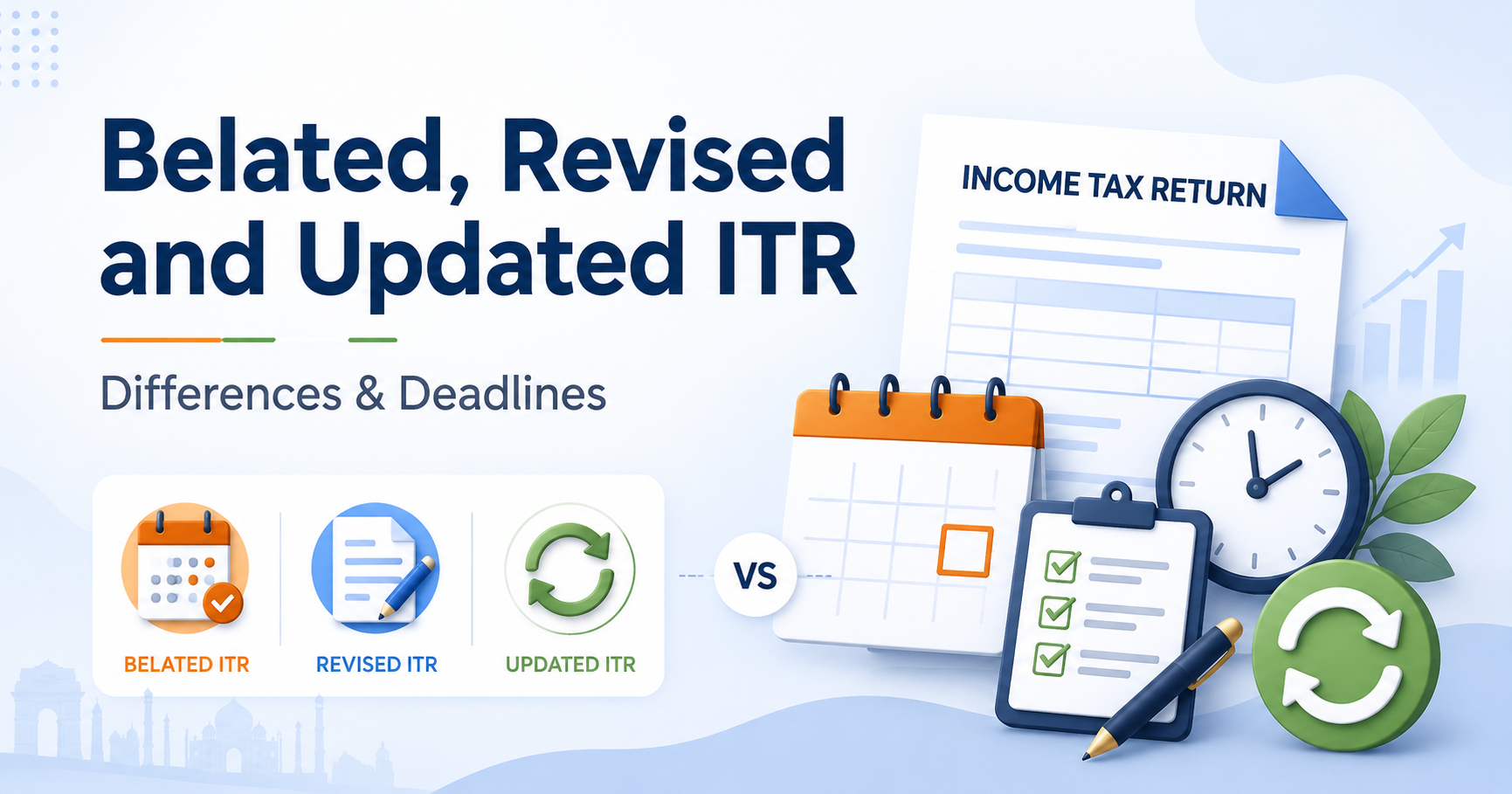
In this guide, we'll explain the difference between belated, revised, and updated returns, their deadlines, eligibility, and when you should file each one.
What is a Belated ITR?
A Belated ITR is an Income Tax Return filed after the original due date prescribed by the Income Tax Department.
Many taxpayers miss the deadline because of missing documents, last-minute calculations, or personal emergencies. Fortunately, the law allows taxpayers to file a return even after the due date, although certain consequences may apply.
A late ITR filing may result in:
- Late filing fees under applicable provisions
- Interest on outstanding tax liability
- Delay in processing refunds
- Loss of certain tax benefits, where applicable
Although filing after the due date isn't ideal, it is still much better than not filing the return at all.
What is a Revised ITR?
A Revised ITR is filed when you have already submitted your original return but later discover an error or omission.
Common reasons for filing a revised income tax return include:
- Incorrect income reported
- Missing interest income
- Wrong deduction claimed
- Incorrect bank account details
- Errors in personal information
- Missing tax credit or TDS details
The revised return replaces the original return, provided it is filed within the permitted timeline.
One of the biggest misconceptions in the belated vs revised ITR discussion is that taxpayers think both returns are interchangeable. In reality, a revised return is only meant to correct an already filed return, whereas a belated return is meant for taxpayers who missed the filing deadline altogether.
What is an Updated Return (ITR-U)?
The government introduced the updated return ITR-U to encourage voluntary tax compliance.
ITR-U allows taxpayers to update their tax return even after the deadline for filing a revised or belated return has expired. It helps individuals disclose omitted income and pay additional taxes instead of facing future litigation.
However, ITR-U cannot be used in every situation. For example, it cannot be filed merely to increase a refund or reduce tax liability. It is mainly intended for taxpayers who need to report additional income and pay the corresponding taxes.
This provision offers taxpayers another opportunity to remain compliant while reducing the chances of future notices.
Belated vs Revised ITR: Key Differences
The following table explains the major differences between the two filing options.
|
Particulars |
Belated ITR |
Revised ITR |
|
Purpose |
Filed after missing the due date |
Filed to correct errors in an already filed return |
|
Original Return Required |
No |
Yes |
|
Reason for Filing |
Missed due date |
Incorrect information in filed return |
|
Penalty |
May attract late filing fees and interest |
Generally no additional late filing fee if filed within permitted timeline |
|
Can Errors Be Corrected? |
Yes, through subsequent revision if allowed |
Yes, entire return gets replaced |
|
Best For |
Taxpayers who missed filing |
Taxpayers who made mistakes while filing |
When comparing belated vs revised ITR, the key deciding factor is whether you have already filed your original return.
Understanding Updated Return (ITR-U) Separately
While belated and revised returns are often compared together, ITR-U serves an entirely different purpose.
An updated return can generally be filed after the timelines for belated and revised returns have expired, subject to conditions specified under the Income Tax Act.
ITR-U is useful when:
- Additional income was missed
- Certain income was unintentionally omitted
- Wrong income calculations require correction with additional tax payment
- Taxpayer wants to voluntarily comply before receiving a notice
Unlike revised returns, ITR-U cannot be used to claim additional refunds or reduce tax liability.
Deadlines You Should Know
Every taxpayer should be aware of the applicable filing timelines.
Original Return
The original return should be filed on or before the due date notified by the Income Tax Department.
Belated Return
An ITR filing after due date is permitted only up to the deadline prescribed under the Income Tax Act for the relevant assessment year. Filing beyond this period may not be allowed except through provisions like ITR-U where applicable.
Revised Return
A revised return can generally be filed within the prescribed timeline, provided the original return has already been submitted.
Updated Return (ITR-U)
ITR-U has separate timelines notified under tax laws and is available only under specified conditions with applicable additional tax.
Since tax deadlines may change from year to year, taxpayers should always verify the latest due dates before filing.
When Should You File Each Type of Return?
Choosing the correct return depends entirely on your situation.
File a Belated Return If:
- You forgot to file your return.
- You missed the due date.
- You still wish to remain tax compliant.
- You want to avoid further legal consequences.
File a Revised Return If:
- You already filed your ITR.
- You discovered incorrect income.
- You forgot to claim deductions.
- You entered incorrect personal details.
- Your tax calculations were inaccurate.
File an Updated Return (ITR-U) If:
- The timelines for revised and belated returns have expired.
- Additional income needs to be reported.
- You wish to voluntarily correct tax compliance.
- You are willing to pay the applicable additional tax.
Understanding belated vs revised ITR helps taxpayers select the right option instead of filing the wrong type of return. For NRIs dealing with overseas income, foreign assets, or India tax filing requirements, consulting an experienced nri tax consultant india can help ensure accurate reporting and compliance.
Common Mistakes Taxpayers Make
Many taxpayers unintentionally create compliance issues because they misunderstand the available filing options.
Some common mistakes include:
- Filing a revised return without submitting the original return.
- Assuming a belated return can only be filed immediately after the due date.
- Ignoring omitted income.
- Waiting for a tax notice before correcting mistakes.
- Missing the applicable filing deadlines.
Avoiding these mistakes can help ensure faster processing and fewer compliance concerns.
Can You Revise a Belated Return?
Yes. If permitted under the applicable provisions, a belated return can also be revised within the prescribed timeline after filing.
For example, suppose you missed the original due date and later filed a belated return. If you subsequently notice incorrect income, missing deductions, or inaccurate information, you may be able to submit a revised return, subject to the prevailing tax rules.
This flexibility makes it even more important to understand belated vs revised ITR, as taxpayers often need to use both provisions in sequence. Since choosing between a belated return, revised return, and updated return depends on individual tax situations, taking guidance from the best online tax consultant india can help taxpayers avoid filing errors and meet compliance requirements.
Benefits of Filing the Correct Return
Selecting the correct return type offers several advantages.
These include:
- Better tax compliance
- Reduced chances of receiving notices
- Faster processing of returns
- Accurate tax records
- Proper reporting of income
- Peace of mind during future assessments
Tax compliance becomes much simpler when taxpayers understand which return is appropriate for their situation. For taxpayers who need expert guidance on choosing the correct return type, professional income tax advisory services can help simplify the filing process and ensure better compliance.
Why Consider Professional Assistance?
Income tax rules continue to evolve, and selecting the wrong return type can result in avoidable complications.
Professional experts can help you:
- Identify the correct return category
- Review tax calculations
- Verify deductions and exemptions
- Correct filing errors
- Submit returns accurately within the applicable timelines
Many taxpayers also prefer online itr filing services because they simplify documentation, reduce errors, and provide expert guidance throughout the filing process.
Conclusion
Knowing the difference between a belated return, a revised return, and an updated return is essential for every taxpayer. While a belated return helps if you miss the filing deadline, a revised return allows you to correct mistakes in an already filed return. On the other hand, ITR-U provides an opportunity to voluntarily disclose additional income after the usual filing timelines have passed.
Understanding belated vs revised ITR enables taxpayers to make informed decisions, remain compliant, and avoid unnecessary penalties. Whether you are filing on time, correcting an earlier mistake, or updating previously omitted income, choosing the right return type is the key to smooth and hassle-free tax compliance. Learn more about ITR filing options and expert tax guidance to ensure you choose the right approach for your situation.
Need Expert Help With Your ITR Filing?
Confused between belated, revised, or updated ITR? Get professional guidance to choose the right return type, avoid filing errors, and stay compliant. Connect with the best online tax consultant in India for reliable tax support.
Call us: +91 63669 09909
Email: contact@taxfilr.com
Frequently Asked Questions
1. Can I correct mistakes after submitting my tax return?
Yes, if you discover errors such as incorrect income details, missing deductions, or inaccurate personal information, you can make corrections within the time allowed under the Income Tax Act.
2. What happens if I miss the tax return filing deadline?
Missing the filing deadline may result in late fees, interest on unpaid taxes, delayed refunds, and, in some cases, the loss of certain tax benefits. Filing as soon as possible helps minimize these consequences.
3. Can I claim a refund after filing late?
Yes, if you are eligible for a refund, you can generally claim it by submitting your return within the applicable timelines prescribed by the Income Tax Department.
4. Is it necessary to pay additional tax while updating a return?
If additional income is disclosed after the original filing period, you may have to pay the applicable tax, interest, and any additional amount required under the prevailing tax provisions.
5. How can I check the status of my submitted return?
You can track the processing status by logging into the Income Tax e-Filing portal using your account credentials and navigating to the return status section.
6. Should I file the return myself or seek professional assistance?
If your tax situation is straightforward, self-filing may be sufficient. However, professional assistance can help reduce errors, ensure compliance, and simplify the filing process, especially for complex financial situations.