

Managing losses correctly while filing your Income Tax Return can help taxpayers reduce their future tax burden and ensure they do not miss out on eligible benefits under the Income Tax Act. Many taxpayers experience losses from investments, business activities, or house property, but they may not know that certain losses can be adjusted against income in the same year or carried forward for future years.
Understanding the process of carry forward losses in ITR is important because it allows taxpayers to use eligible losses strategically and maintain accurate tax records. Whether you are an individual taxpayer, business owner, or investor, knowing how loss adjustment works can make your tax planning more effective.
Call us: +91 63669 09909
What Are Set-Off and Carry Forward of Losses?
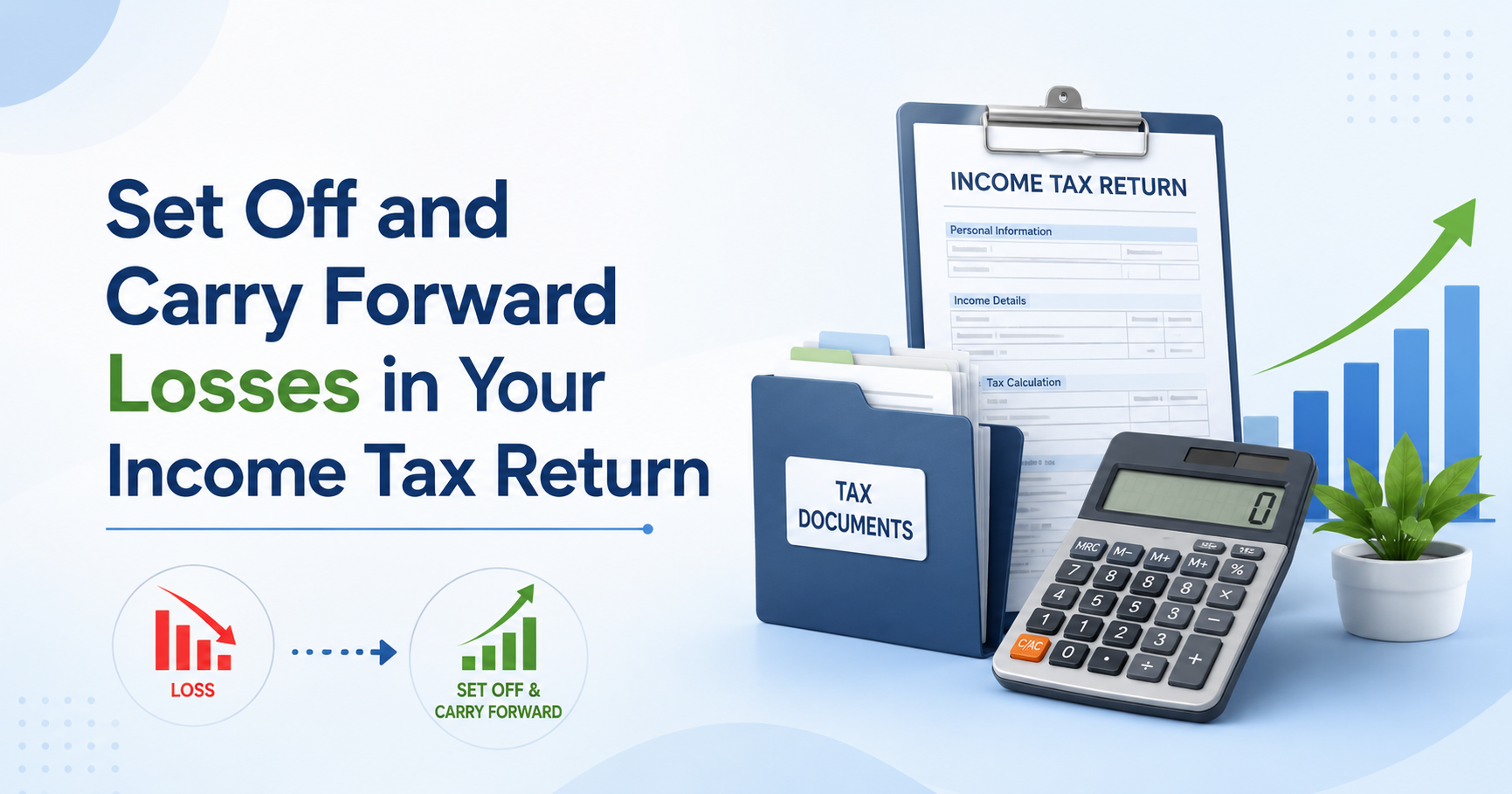
A loss occurs when your expenses, investments, or business costs exceed your income from a particular source. The Income Tax Act provides rules that allow taxpayers to adjust these losses against certain incomes. This adjustment is known as set-off.
When a loss cannot be fully adjusted in the same financial year, taxpayers may be allowed to carry it forward and use it against eligible income in future years. This process is called carry forward of losses.
The concept of carry forward losses in ITR helps taxpayers preserve their losses instead of losing the opportunity to claim them. However, different types of losses have different rules, restrictions, and time limits for carrying them forward. Understanding these provisions is essential for accurate income tax filing services and effective tax planning.
Understanding Set-Off of Losses
Set-off means adjusting a loss against available income during the same financial year. There are two main types of set-off:
1. Intra-Head Set-Off
This means adjusting losses against income from the same category. For example, a loss from one business activity may be adjusted against profit from another business activity, subject to applicable rules.
2. Inter-Head Set-Off
This allows adjustment of losses from one income category against another category of income. However, certain restrictions apply. For example, capital losses cannot generally be adjusted against regular income sources.
Taxpayers should understand these rules before filing their returns because incorrect adjustments can lead to tax notices or rejection of claims. Proper knowledge of how to set off losses in income tax can help in accurate tax filing and better financial planning.
Types of Losses That Can Be Carried Forward
Different types of losses have different carry-forward provisions. Some common categories include:
Business Loss
Business losses occur when the expenses of running a business exceed the income generated during a financial year. Taxpayers can generally carry forward eligible business losses for future years if they meet the required conditions.
While filing returns, taxpayers should correctly report their business loss in ITR to ensure that the loss record is maintained and can be used in future assessments through online tax return filing services.
Capital Loss
Capital losses arise when taxpayers sell capital assets, such as shares, property, or other investments, at a price lower than their purchase cost. These losses are classified as short-term or long-term depending on the nature and holding period of the asset.
A proper understanding of capital loss carry forward rules is essential because capital losses can usually be adjusted only against specific types of capital gains. Maintaining accurate records of purchase costs, sale values, and transaction details is important for claiming these benefits.
Loss from House Property
Income from house property is another area where taxpayers may experience losses, especially when home loan interest payments are higher than rental income.
The concept of house property loss carry forward allows eligible taxpayers to use certain losses from house property against future income according to prescribed conditions. Keeping loan documents, interest certificates, and property-related records can make the filing process smoother.
Rules for Carry Forward Losses in ITR
To successfully claim future benefits, taxpayers must follow specific rules while filing their returns. The most important requirement is filing the Income Tax Return within the prescribed timeline. If the return is not filed on time, some losses may not be eligible for carry forward.
The rules for carry forward losses in ITR vary depending on the type of loss. For example, business losses and capital losses have different adjustment methods and validity periods. Taxpayers should carefully check the applicable provisions before submitting their returns or using online ITR filing services.
Another important point is maintaining proper documentation. Records related to income, expenses, investments, and previous returns help support loss claims if the Income Tax Department requests clarification.
Steps to Report Losses While Filing Your ITR
Reporting losses correctly in your Income Tax Return requires attention to detail. Follow these steps:
- Identify the type of loss
Determine whether the loss relates to business, capital assets, house property, or another category. - Calculate the eligible loss amount
Ensure that calculations are accurate and based on supporting documents. - Enter loss details in the correct section of the ITR form
Different losses need to be reported under specific schedules provided in the tax return forms. - Check eligibility for carry forward
Confirm whether the loss can be carried forward and for how many years. - Submit the return before the due date
Timely filing is essential for preserving the right to claim eligible losses in future years.
Taxpayers using professional tax filing platforms such as Taxfilr can simplify the process by organizing information and reducing the chances of common filing errors.
Deadline to Carry Forward Losses
One of the most important aspects taxpayers should remember is the filing deadline. The deadline to carry forward losses depends on the applicable income tax rules and the taxpayer category.
Generally, taxpayers must file their returns within the due date to claim certain carry-forward benefits. Missing the deadline may result in losing the ability to carry forward specific losses, except in cases where special provisions apply. This is especially important for individuals seeking guidance from an NRI tax consultant India for managing their tax obligations.
Therefore, it is advisable to prepare tax documents well in advance and avoid last-minute filing. Timely filing not only helps preserve loss benefits but also supports better tax management.
Common Mistakes to Avoid While Carrying Forward Losses
Many taxpayers make errors while reporting losses, which can affect future claims. Some common mistakes include:
- Not filing the return within the required timeline
- Entering incorrect loss amounts
- Selecting the wrong ITR form
- Failing to maintain supporting documents
- Ignoring previous years’ loss details
Reviewing previous tax records before filing the current return can help identify available losses and ensure they are properly reported.
How Tax Planning Helps Manage Losses Better
Effective tax planning is not only about reducing tax payments but also about using available provisions wisely. Loss management is an important part of financial planning because eligible losses can reduce taxable income in future years.
Taxpayers should review their investments, business performance, and property income regularly to understand potential tax implications. Consulting the best online tax consultant India can also make tracking previous losses and filing returns easier.
Taxfilr helps taxpayers manage their filing process with a focus on accuracy and compliance, allowing individuals and businesses to handle their tax responsibilities more confidently.
Conclusion
Losses are a natural part of financial activities, whether they come from business operations, investments, or property ownership. However, the tax system provides mechanisms that allow eligible losses to be adjusted and carried forward for future benefits.
Understanding the rules related to carry forward losses in ITR helps taxpayers make informed decisions and avoid losing valuable tax benefits. By maintaining proper records, filing returns on time, and reporting losses accurately, taxpayers can improve their overall tax planning.
A clear understanding of loss adjustment rules can make the Income Tax Return filing process simpler, more efficient, and financially beneficial in the long run. Learn more about these provisions to maximize your eligible tax benefits.
Need Help With Your Tax Filing?
Managing tax losses and understanding applicable income tax rules can be challenging. Get expert assistance from Taxfilr to ensure accurate filing, proper reporting, and better tax planning. Our team can help you navigate tax-related processes with confidence.
Call us: +91 63669 09909
Email: contact@taxfilr.com
Frequently Asked Questions
What is the meaning of set-off of losses in income tax?
Set-off of losses means adjusting a financial loss against eligible income earned during the same financial year. This helps reduce taxable income and lower the overall tax liability, subject to the rules applicable to different types of losses.
Can all types of losses be adjusted against any income?
No, all losses cannot be adjusted against every type of income. Each category of loss has specific rules regarding where and how it can be adjusted under income tax provisions.
How many years can eligible losses be used in future years?
The period for using losses in future years depends on the type of loss. Different categories of losses have different time limits as prescribed under income tax regulations.
What happens if the income tax return is not filed within the due date?
Filing the return within the applicable due date is important because certain benefits related to loss claims may not be available if the return is filed late.
Are investment-related losses treated differently from other losses?
Yes, investment-related losses follow separate tax rules. Their adjustment depends on factors such as the type of asset, holding period, and the nature of the gain or loss.
Can loss details be corrected after submitting the income tax return?
Eligible taxpayers may be able to revise their return to correct errors or update information, provided they meet the conditions and timelines specified by the Income Tax Department.
Why should taxpayers maintain records for losses?
Maintaining proper records such as income details, expense proofs, investment documents, and previous returns helps support claims and makes future tax filing more accurate.
Is professional assistance helpful for managing tax losses?
Yes, professional guidance can help taxpayers understand applicable rules, avoid filing mistakes, and ensure that eligible tax benefits are properly claimed.