

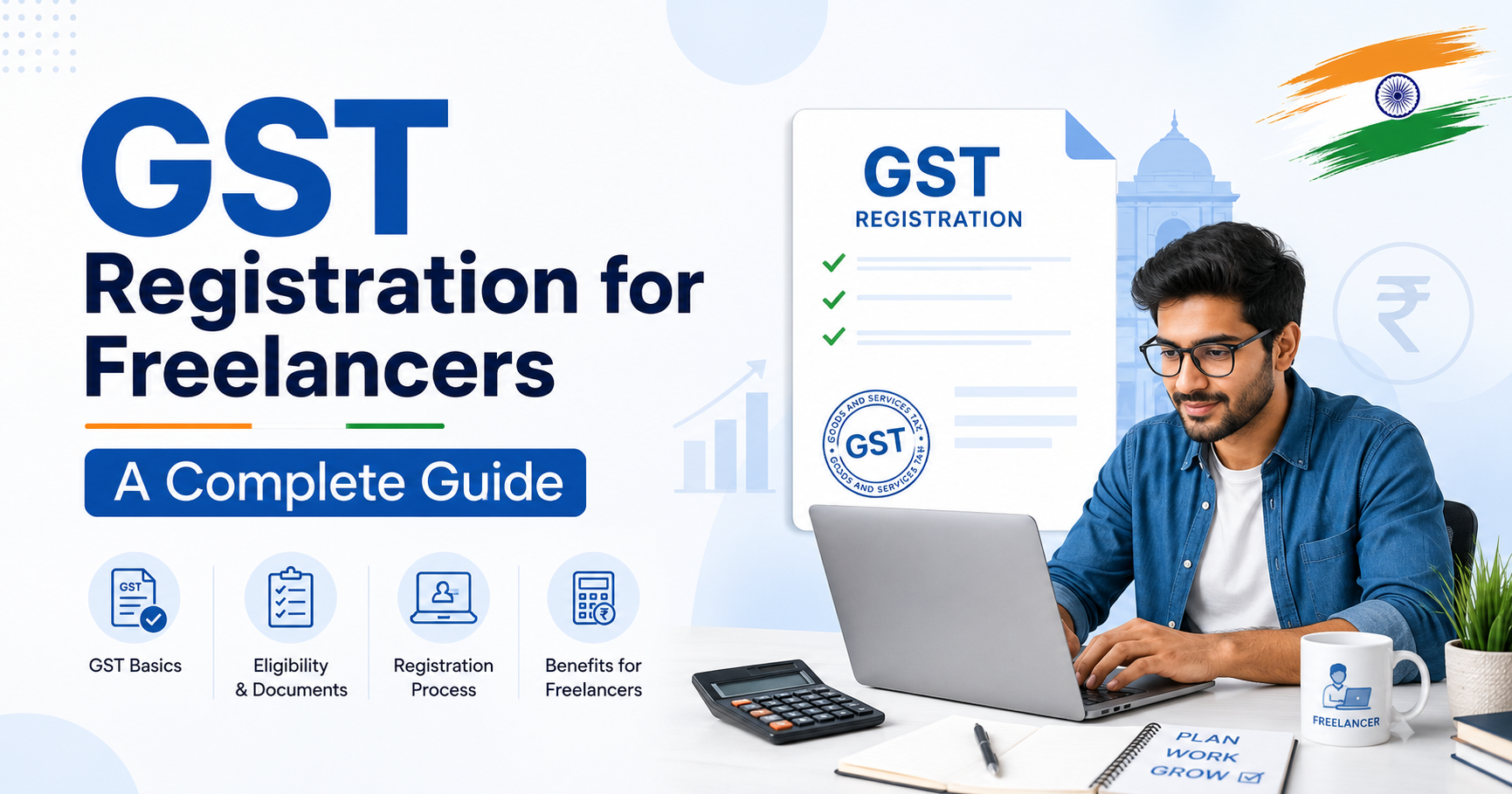
In today's digital economy, freelancers, consultants, startups, and small business owners are contributing significantly to India's growing business landscape. Whether you are a graphic designer, content writer, software developer, digital marketer, photographer, or consultant, understanding GST compliance is essential for running your business smoothly.
Many professionals often wonder whether GST registration is mandatory, when they should apply, and what benefits it offers. This guide answers all these questions in a simple and practical manner. If you're planning to expand your client base or work with larger organizations, understanding GST registration for freelancers can help you stay compliant while building credibility. Additionally, exploring GST Services in India can make the registration process, compliance, and return filing much easier for freelancers and growing businesses.
What is GST Registration?
Goods and Services Tax (GST) is an indirect tax levied on the supply of goods and services across India. Businesses and eligible professionals are required to register under the GST regime once they meet the prescribed eligibility criteria.
A GST registration provides a unique GST Identification Number (GSTIN), allowing businesses to collect GST from customers, claim input tax credit (where applicable), and comply with tax regulations.
For independent professionals, GST registration for freelancers is not just about legal compliance. it also creates opportunities to work with corporate clients who often prefer GST-registered vendors.
Who Should Apply for GST Registration?
Not every freelancer or small business is required to register immediately. However, registration becomes necessary under specific circumstances.
You should consider GST registration if you:
- Cross the prescribed annual turnover threshold.
- Provide services to clients across different states.
- Sell products or services through e-commerce platforms where GST compliance is required.
- Want to claim input tax credit on eligible business expenses.
- Wish to establish greater credibility with corporate clients.
Even when registration is voluntary, many professionals choose GST registration for freelancers because it enhances business reputation and supports long-term growth.
Understanding the GST Registration Limit
One of the most common questions is about the GST registration limit.
Generally, service providers are required to register once their aggregate annual turnover exceeds the threshold prescribed under GST law. However, the applicable limit may vary depending on the nature of the business and government notifications.
Apart from turnover, registration may also become mandatory in specific situations, such as interstate taxable supplies or certain categories of businesses notified under GST regulations. Businesses that require GST compliance often also benefit from TDS Return Filing Services to ensure timely tax deductions, accurate filings, and overall regulatory compliance.
Since GST rules are updated from time to time, it's advisable to review your eligibility regularly and seek professional guidance whenever needed.
Benefits of GST Registration for Freelancers
Many freelancers assume GST is only beneficial for large businesses. In reality, registration offers several advantages regardless of business size.
1. Increased Business Credibility
A GSTIN demonstrates that your business operates within the legal framework. Many companies prefer working with GST-registered professionals, making GST registration for freelancers a valuable step toward attracting premium clients.
2. Better Opportunities with Corporate Clients
Large organizations often require vendors to provide GST-compliant invoices. Having GST registration allows you to participate in corporate projects without compliance-related concerns.
3. Easier Business Expansion
As your freelance business grows, GST registration ensures you are already prepared to handle larger contracts, interstate clients, and higher revenue.
4. Input Tax Credit Benefits
Eligible registered businesses can claim input tax credit on qualifying business purchases, reducing the overall tax burden while improving cost efficiency.
5. Improved Financial Documentation
GST-compliant invoicing and regular return filing create organized financial records that can support loan applications, business partnerships, and investment opportunities. Well-maintained financial records also simplify tax return preparation services, making annual tax compliance easier for freelancers and growing businesses.
GST Registration for Small Business
While freelancers often work independently, small businesses face similar compliance requirements.
Whether you operate a consultancy, agency, retail shop, manufacturing unit, or service company, GST registration for small business owners provides several operational advantages. Registered businesses can issue GST invoices, improve customer confidence, participate in government tenders, and maintain smoother tax compliance.
For growing enterprises, GST registration becomes an important milestone in building a professional and scalable business structure.
GST Registration Documents Required
Before applying, it's important to keep all necessary documents ready. Having complete documentation helps avoid delays during the registration process.
Common GST registration documents include:
- PAN Card of the applicant or business entity
- Aadhaar Card
- Passport-size photograph
- Business address proof
- Identity proof
- Bank account details
- Proof of business registration (if applicable)
- Digital Signature Certificate (for applicable entities)
Depending on the business structure and type of registration, additional documents may also be required.
How to Complete GST Registration Online
The government has made the application process largely digital, making GST registration online convenient for eligible applicants.
The general process includes:
- Check your eligibility for GST registration.
- Gather all required documents.
- Complete the online application.
- Verify the application using the prescribed authentication method.
- Respond promptly if any clarification is requested by the authorities.
- Receive your GSTIN upon successful approval.
Although the process appears straightforward, many applicants prefer professional assistance to minimize errors and ensure faster approval.
Common Mistakes to Avoid
Applicants often face unnecessary delays due to avoidable mistakes during registration.
Some common errors include:
- Entering incorrect PAN or Aadhaar details.
- Uploading unclear or incomplete documents.
- Providing mismatched business address information.
- Selecting the wrong business category.
- Ignoring notices requesting additional clarification.
- Failing to verify application details before submission.
Carefully reviewing every detail before submitting your application can significantly improve the chances of timely approval.
GST Compliance After Registration
Obtaining GST registration is only the beginning. Businesses must continue complying with GST regulations through regular record keeping and timely return filing.
Good compliance practices include:
- Issuing GST-compliant invoices.
- Maintaining accurate sales and purchase records.
- Filing GST returns within due dates.
- Reconciling tax data regularly.
- Updating registration details whenever business information changes.
Consistent compliance helps avoid penalties while maintaining a positive compliance history. Along with GST compliance, many businesses also use online ITR filing services to ensure their annual income tax returns are filed accurately and on time.
How to Get Your GST Certificate
After successful registration, your GST registration certificate becomes available electronically.
Businesses can complete GST certificate download through the official GST portal by logging into their registered account and accessing the certificate section. Since the certificate is digitally generated, there is no requirement for a physical copy issued by the department.
Keeping a copy readily available is useful for opening business bank accounts, working with clients, vendor onboarding, and various compliance requirements.
Why Professional Assistance Makes a Difference
While GST registration can be completed independently, many freelancers and small businesses prefer working with experienced professionals.
Professional assistance can help with:
- Determining eligibility.
- Preparing accurate documentation.
- Reducing application errors.
- Responding to departmental queries.
- Ensuring timely registration.
- Providing ongoing GST compliance support.
This allows business owners to focus on serving clients while experts handle the compliance process. Businesses with overseas income or international tax obligations may also benefit from consulting an NRI tax consultant India for expert guidance on cross-border tax compliance.
Why Choose Taxfilr?
At Taxfilr, we understand the unique challenges faced by freelancers, startups, and small businesses. Our team simplifies the registration process by offering end-to-end assistance. from document verification and application filing to post-registration support.
Whether you're applying for your first GST registration or expanding your business operations, we help ensure the process is smooth, accurate, and compliant with the latest regulations.
Our goal is to make GST compliance simple, transparent, and hassle-free so you can focus on growing your business with confidence.
Conclusion
Choosing GST registration for freelancers is an important step toward building a professional, compliant, and future-ready business. Beyond meeting legal requirements, registration strengthens your credibility, opens doors to larger clients, and supports sustainable business growth.
Whether you are an independent professional beginning your journey or an established entrepreneur scaling operations, understanding GST requirements helps you make informed decisions. By staying compliant and seeking expert guidance when needed, you can concentrate on what matters most. Delivering value to your clients and expanding your business with confidence. If you need expert assistance with GST registration and ongoing tax compliance, choosing the best online tax consultant India can help simplify the process and ensure your business remains compliant. Explore More additional tax compliance resources to stay updated with the latest GST regulations.
Get Expert Assistance for Your GST Compliance Needs
Managing tax compliance can be easier with the right support. Whether you need guidance with registration, documentation, or ongoing compliance requirements, Taxfilr's experts are here to help you complete the process smoothly and accurately.
For professional assistance and personalized support, get in touch with us today.
Call us: +91 63669 09909
Email: contact@taxfilr.com
Frequently Asked Questions
Is GST mandatory for every freelancer in India?
No, GST is not mandatory for every freelancer. The requirement depends on factors such as annual turnover, type of services provided, and specific conditions defined under GST regulations.
How long does it take to get a GST number after applying?
The approval timeline depends on the accuracy of the application and verification process. If all details and documents are correct, registration is generally completed within the time prescribed by the GST authorities.
Can an individual freelancer apply for GST registration without forming a company?
Yes, an individual can apply for GST registration using their personal details and operate as a sole proprietor without creating a separate company or legal entity.
What happens if a business does not register under GST when required?
Failure to register when required may result in penalties and compliance issues. It can also create difficulties while working with clients who require tax-compliant invoices.
Can GST details be updated after registration?
Yes, certain details such as business address, contact information, and other eligible particulars can be updated through the GST portal by submitting a modification request.
Do freelancers need to file returns after getting GST registration?
Yes, registered taxpayers need to file applicable GST returns within the specified timelines, even if there are no transactions during a particular period.