

For many salaried individuals, tax season often brings a mix of confidence and confusion. Tax has already been deducted, TDS is deducted, Form 16 is available but filing the return still looks complicated. This guide on ITR Filing for Salaried Employees is made to simplify the process and help the taxpayers file their returns correctly.
Tax returns for salaried folks are usually pretty straightforward, but even small errors can result in notices, delays or wrong tax calculations. Some of the most common mistakes are forgetting to include interest income, wages from a previous employer or double-checking the return. If you are new to ITR filing online India, it helps to view the process as a yearly review of your income, deductions, and tax payments. Many taxpayers also choose online ITR filing services for guidance, document review, and accurate return preparation, especially when filing for the first time.
Why ITR Filing for Salaried Employees in India: Complete Guide Matters
ITR Filing for Salaried Employees in India: Complete Guide matters because salary TDS is not always the final tax answer. Your employer deducts tax based on available declarations, but your financial year may also include savings interest, capital gains, freelance income, rent, or a job switch.
Filing also helps you claim eligible refunds and keep a clean compliance record for loans, visas and future financial checks.
Before starting the return process, make sure you have all the necessary documents to avoid any interruptions later. The following documents are usually needed:
Documents Required Before Filing
- PAN Card
- Aadhaar Card
- Salary slips
- Form 16
- Bank account details
- Form 26AS
- Annual Information Statement (AIS)
- Taxpayer Information Summary (TIS)
- Rent receipts
- Home loan interest certificate
- Investment proofs
- Donation receipts
The process of filing Form 16 ITR is successfully initiated by matching the information given in Form 16 with the tax credits and income details shown in AIS and Form 26AS. Form 16 is a very important document but it should not be treated as the sole source of information. Interest income, dividends and TDS on bank deposits are shown separately.
Which ITR Form Should a Salaried Employee Choose?
The right form depends on your income type. ITR-1 is commonly used by eligible resident individuals with a salary, one house property and other sources such as interest. ITR-2 is generally relevant when there are capital gains, more than one house property, foreign assets, or income categories not covered by ITR-1.
The biggest confusion in ITR Filing for Salaried Employees in India: Complete Guide is choosing a form because a colleague used it. Your income profile decides the form. An income tax return for a salaried person may look simple, yet gains from shares, mutual funds or foreign holdings can change the return type.
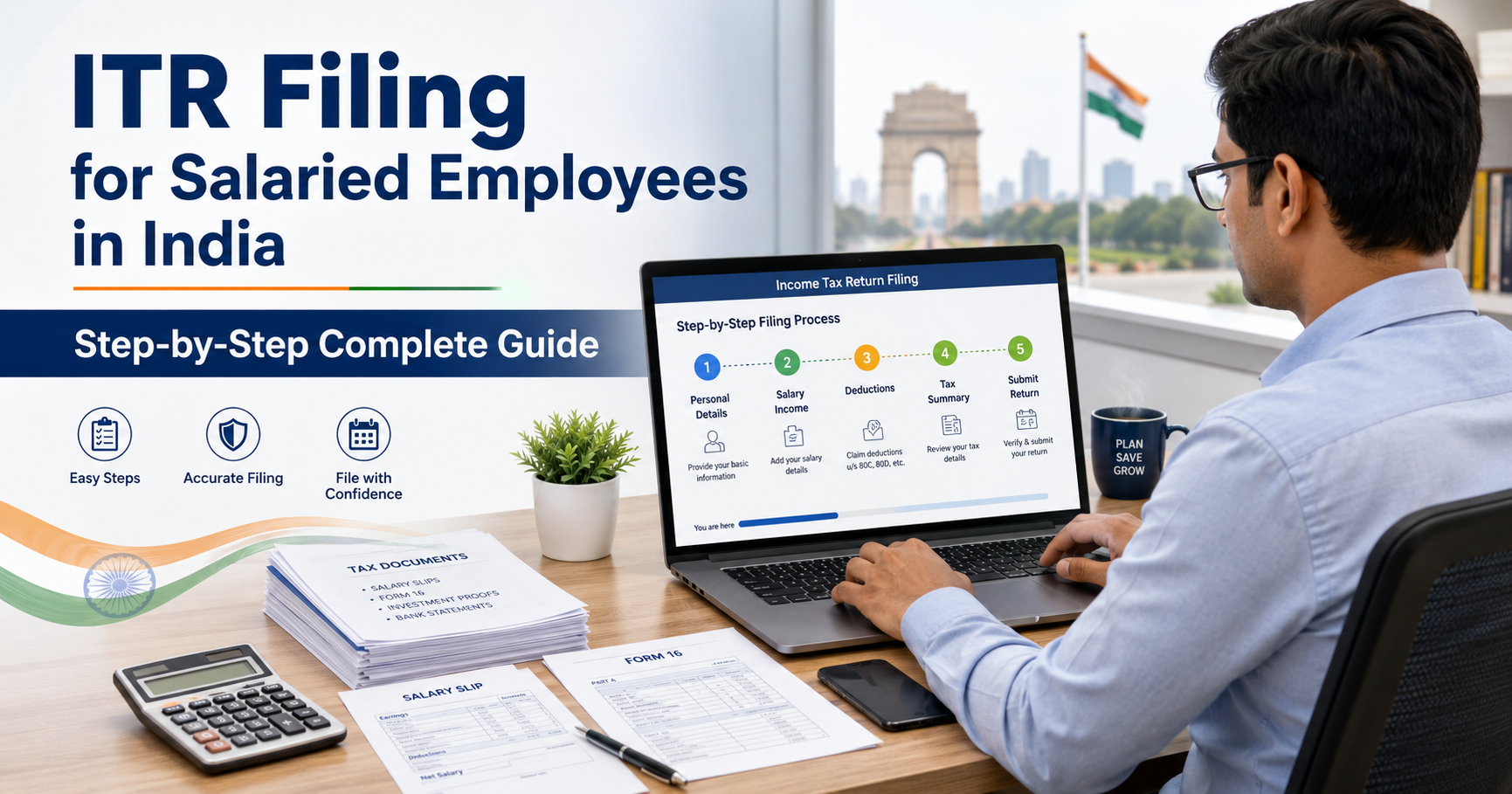
Step-by-Step Process to File Your Return Online
Before you e file an income tax return, log in to the official income tax portal and review the pre-filled data carefully. Pre-filled does not mean automatically correct.
1. Select the assessment year
Use your PAN or Aadhaar-linked credentials. Select the correct assessment year for the financial year you are reporting.
2. Choose the applicable form
If the portal suggests a form, still verify whether it fits your income. ITR Filing Salaried Employees in India: Complete Guide is easier when you check salary, house property, interest, capital gains and other income first.
3. Review personal and bank details
Check your name, address, mobile number, email, Aadhaar, bank account and IFSC. Refunds are processed only to a validated bank account.
4. Match salary, TDS and income
Compare Form 16, payslips, AIS, TIS and Form 26AS. If figures differ, understand why. AIS may include interest or dividend income you forgot to add.
5. Add deductions and regime details
Check whether the old or new tax regime is better for you. Deductions such as life insurance, EPF, PPF, ELSS, health insurance and home loan interest may matter under the old regime. The new regime has different rules, so compare before submitting.
6. Pay, submit and verify
If extra tax is payable, pay it before final submission and update the challan details. For anyone wondering how to file ITR online, the final step is not just submission; e-verification is equally essential.
Common Deductions and Salary Details to Review
ITR Filing for Salaried Employees in India: Complete Guide should include a careful look at salary components. Basic salary, HRA, special allowance, bonus, leave encashment and perquisites may be treated differently. Do not blindly copy numbers if you have arrears, joining bonus recovery or taxable reimbursements.
Under the old regime, employees often review Section 80C, 80D, HRA, home loan interest and donations. Under the new regime, many traditional deductions are not available, though some salary-related benefits may still apply depending on the rules for that year. Compare both regimes, then file with the one that gives a lawful advantage.Many salaried taxpayers choose to consult an income tax consultant online for assistance with tax calculations, deduction claims, income reporting, and return verification, helping ensure a smoother and more accurate filing experience.
Mistakes Salaried Employees Often Make
A reliable ITR Filing for Salaried Employees in India: Complete Guide should warn you about errors that look small at first. The most common one is assuming Form 16 includes everything. Banks, brokers and tenants may report information separately, and the tax department can see those records.
Another mistake is ignoring previous employment income. Employees also forget savings account interest, fixed deposit interest, dividend income, capital gains or taxable allowances. Finally, many people submit the return but forget verification, leaving it incomplete.
The filing process does not end once the return is submitted. After verification, the Income Tax Department begins processing the return.
If a refund is due, taxpayers can track its status through the official portal. Ensure that the bank account linked to the return remains active and validated.
It is also advisable to retain important documents, including:
- Form 16
- Form 26AS
- AIS
- TIS
- Rent receipts
- Investment proofs
- Home loan certificates
- Tax payment challans
These records may be useful in case of future assessments, rectifications, or financial verification requirements.
Taxpayers with multiple income sources, capital gains, job changes, or complex deduction claims may benefit from professional assistance. Many individuals use online tax return filing services to ensure accurate reporting, proper tax calculations, and timely compliance with filing requirements.
Conclusion
If you approach a salary return in a structured way, it is much easier to fill in. Start with Form 16, and then cross-check it with AIS, TIS and Form 26AS to ensure that all income and tax credits are reported correctly. Choose the right kind of return depending on the source of your income. Compare tax regimes well and do verification after you submit.
Most problems with filing come from taxpayers who rush, forget they have other income sources, or assume the pre-filled information is always right. Keeping good records and looking over things thoroughly can save you a lot of unnecessary headaches.
With the right steps, ITR Filing for Salaried Employees becomes a simple process that helps with tax compliance, claiming eligible refunds, and maintaining a reliable financial record for future needs. Learn More about tax filing requirements, deductions, and best practices to make informed financial decisions.
Need Expert Help with ITR Filing?
Simplify your ITR filing process with professional guidance tailored to your income and tax situation. Whether you need help with salary income, deductions, refunds, or compliance, expert support can help ensure accurate and timely filing.
Call: +91-6366 909 909
Email: contact@taxfilr.com
Frequently Asked Questions
What documents are required for salaried employee ITR filing?
For salaried employee ITR filing, you should keep Form 16, PAN, Aadhaar, bank statements, Form 26AS, AIS, TIS, investment proofs, rent receipts, and home loan certificates ready before starting the filing process.
How can I complete income tax return filing online?
Income tax return filing online can be completed through the Income Tax Department’s e-filing portal. Taxpayers need to select the correct ITR form, review income details, claim eligible deductions, submit the return, and complete e-verification.
Is ITR filing for salary income mandatory?
ITR filing for salary income may be mandatory if your gross total income exceeds the applicable exemption limit or if you meet other return filing conditions prescribed under the Income Tax Act.
What is the process for online ITR filing for salaried employees?
Online ITR filing for salaried employees involves collecting tax documents, verifying salary and TDS details, selecting the correct return form, reporting all sources of income, claiming eligible deductions, and verifying the return after submission.
How does income tax filing for salaried employees help with refunds?
Proper income tax filing for salaried employees helps identify excess tax deducted during the financial year. If eligible, taxpayers can claim a refund after the return is processed by the department.
Should I use professional ITR filing services?
Many taxpayers choose ITR filing services when they have multiple income sources, capital gains, foreign assets, or need assistance in avoiding errors and ensuring compliance with tax regulations.
Can I file income tax return online without Form 16?
Yes, you can file income tax return online even without Form 16 by using salary slips, Form 26AS, AIS, TIS, bank statements, and other income records to accurately report your income.
What are the common mistakes in tax filing for salaried employees?
Common errors in tax filing for salaried employees include reporting incorrect salary details, missing interest income, ignoring previous employer income, selecting the wrong ITR form, and forgetting to e-verify the return after submission.