

If you're a Non-Resident Indian (NRI) planning to transfer money from India to your overseas bank account, understanding Form 15CA 15CB is essential. These forms are mandatory in many cases and help ensure that taxes applicable to foreign remittances are paid before funds are transferred.
Whether you're repatriating sale proceeds from property, inherited assets, rental income, or investments, knowing when and how to submit Form 15CA 15CB can save you from delays, compliance issues, and penalties.
In this comprehensive guide, we'll explain everything you need to know about Form 15CA 15CB, its purpose, eligibility, filing process, required documents, and common mistakes to avoid.
Call us: +91 63669 09909
What is Form 15CA and Form 15CB?
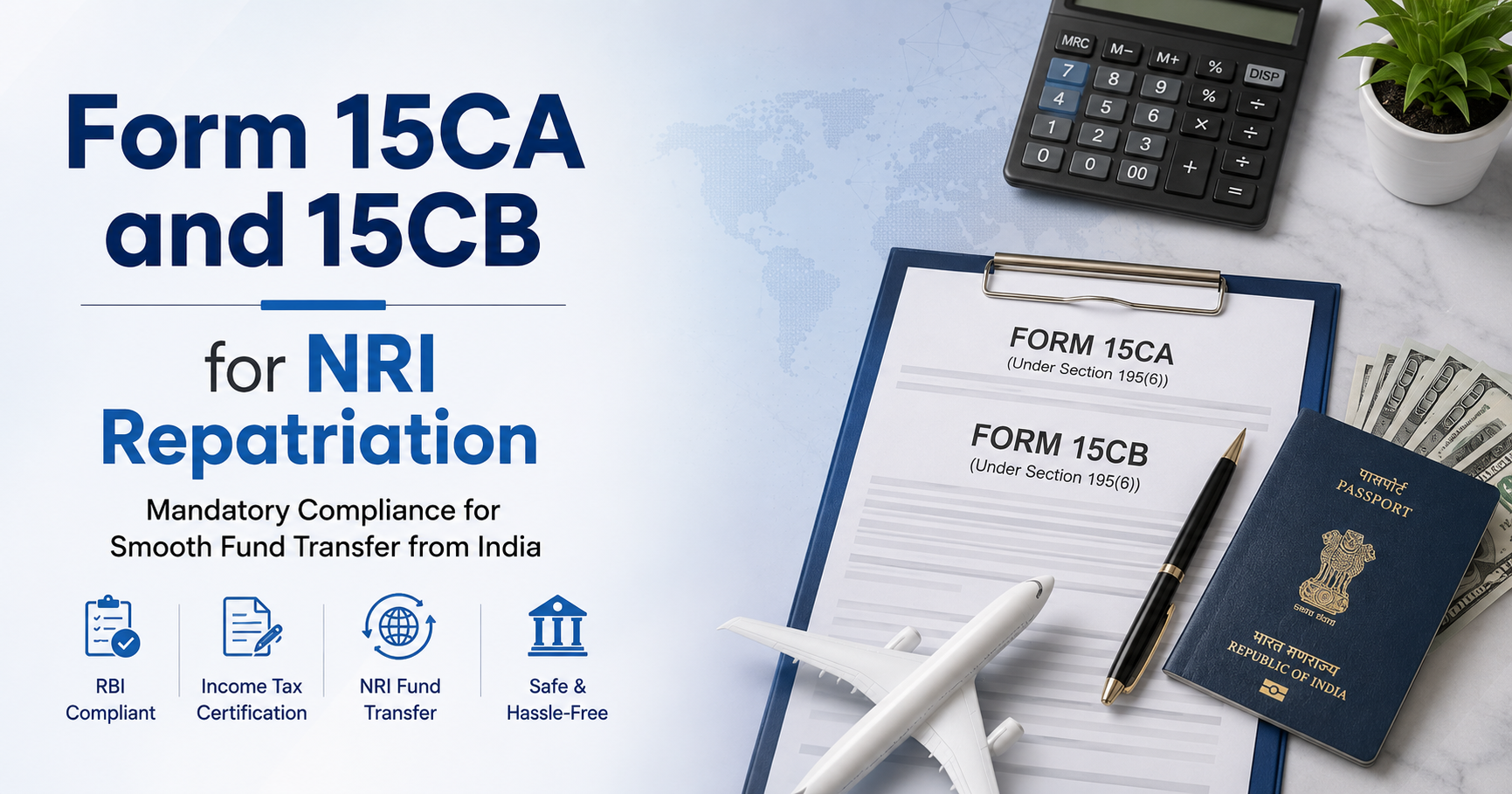
Form 15CA is a declaration submitted online to the Income Tax Department before making a foreign remittance. It provides details about the payment, the remitter, the recipient, and applicable tax deductions.
Form 15CB is a certificate issued by a Chartered Accountant after verifying the nature of the remittance, tax liability, and compliance with the Income Tax Act. The Form 15CB certificate confirms that the applicable taxes have been correctly calculated and paid, wherever required.
Together, Form 15CA 15CB ensure that foreign remittances from India comply with Indian tax regulations.
Why are Form 15CA and 15CB Required?
The Government of India introduced these forms to monitor international fund transfers and prevent tax evasion. Before money leaves India, banks verify whether the transaction requires tax compliance documentation.
These forms help:
- Ensure correct tax deduction before remittance.
- Maintain transparency in cross-border transactions.
- Prevent tax leakage.
- Facilitate smooth approval of foreign remittances.
Proper tax return preparation also helps individuals maintain accurate financial records and ensure that all required tax details are properly documented. Without the required documentation, banks may refuse to process the transaction.
When is Form 15CA and 15CB Required?
The requirement depends on the type of remittance and the applicable tax provisions.
Generally, Form 15CA 15CB is required for:
- Sale proceeds of property by NRIs.
- Rental income transferred abroad.
- Inheritance received in India.
- Investment redemption proceeds.
- Gifts received in India (subject to tax rules).
- Other taxable payments made outside India.
Certain remittances that are exempt from tax may not require Form 15CB, but Form 15CA may still be applicable depending on the transaction.
Situations Where NRIs Need Form 15CA and 15CB
Some common scenarios include:
Sale of Property
When an NRI sells property in India and wants to transfer the sale proceeds abroad, banks usually require these forms before processing the transaction.
Rental Income
NRIs earning rental income from Indian properties often remit their income overseas after paying applicable taxes.
Inherited Assets
Money received through inheritance can also be repatriated after fulfilling tax and documentation requirements.
Investment Proceeds
Redemption of mutual funds, fixed deposits, shares, or bonds may require compliance documentation before overseas transfer.
These situations commonly involve the repatriation of funds from India, making proper tax compliance essential.
Documents Required
Before applying, keep the following documents ready:
- PAN Card
- Passport
- Aadhaar (if available)
- Overseas address proof
- Indian bank account details
- Foreign bank account details
- Purpose of remittance
- Sale deed (for property transactions)
- Purchase documents
- Capital gains calculation
- Tax payment challans
- Bank statements
- FEMA declaration (if applicable)
Providing complete documentation helps the Chartered Accountant issue the certificate without delays.
Step-by-Step Process for Filing
Step 1: Calculate Tax Liability
Determine whether the remittance is taxable under Indian income tax laws.
Step 2: Obtain Chartered Accountant Certificate
A Chartered Accountant verifies the transaction, applicable tax provisions, and supporting documents before issuing the required certificate.
This CA certificate for foreign remittance plays a crucial role in ensuring compliance.
Step 3: File Form 15CA
After receiving the CA certificate, the remitter completes Form 15CA filing online through the Income Tax e-Filing Portal.
Step 4: Submit Documents to the Bank
The bank receives:
- Acknowledged Form 15CA
- Form 15CB
- Supporting documents
- Identity proof
- Bank request forms
Step 5: Processing of Remittance
Once verification is complete, the bank transfers the funds to the overseas account.
Benefits of Proper Compliance
Completing the required documentation before initiating an overseas remittance offers several important benefits. It not only ensures compliance with Indian tax laws but also makes the entire transfer process faster, safer, and more efficient. Proper documentation reduces the chances of delays, errors, and regulatory issues, allowing NRIs to transfer funds abroad with greater confidence.
For individuals managing complex tax requirements, using reliable tax filing services online can help maintain accurate records and ensure that necessary compliance obligations are completed before making international fund transfers.
Faster Processing
When all required forms and supporting documents are submitted accurately, banks can verify the transaction quickly and process foreign remittances without unnecessary delays or repeated document requests.
Legal Compliance
Submitting the correct documents ensures compliance with the Income Tax Act, FEMA regulations, and RBI guidelines. This helps you complete the remittance process legally and avoid future compliance issues.
Reduced Risk of Notices
Accurate tax calculations and proper documentation significantly reduce the chances of receiving notices, queries, or additional verification requests from the Income Tax Department or other regulatory authorities.
Smooth International Transfers
Verified documentation helps banks process overseas fund transfers efficiently, ensuring that your money reaches the intended foreign bank account without avoidable interruptions or complications.
Common Mistakes to Avoid
Many applicants face delays because of avoidable errors.
Some common mistakes include:
- Incorrect PAN details.
- Wrong remittance purpose code.
- Incomplete property documents.
- Incorrect tax calculation.
- Missing capital gains computation.
- Filing incorrect forms.
- Uploading outdated documents.
Working with experienced professionals can significantly reduce such mistakes.
How Long Does the Process Take?
The timeline depends on document availability and the complexity of the transaction.
Typically:
- Document verification: 1–3 working days
- Chartered Accountant certification: 1–2 days
- Form filing: Same day after verification
- Bank processing: 2–5 working days
Early preparation helps avoid delays, especially for property transactions.
Tax Implications for NRI Repatriation
The tax treatment of an NRI remittance depends on the source of the funds being transferred. Income earned from the sale of property may be subject to capital gains tax, while rental income generated in India is generally taxable under Indian tax laws. Similarly, interest earned on certain bank accounts or investments may be liable for Tax Deducted at Source (TDS) before the funds are remitted abroad. Since NRI tax rules can involve multiple factors such as income sources, tax deductions, and compliance requirements, consulting an experienced nri tax consultant india can help ensure accurate tax planning and proper reporting.
In some cases, inherited assets or funds may not attract tax, but they can still require proper documentation and compliance before repatriation. Understanding NRI repatriation tax rules in advance helps NRIs determine their tax obligations, avoid unnecessary delays, and ensure a smooth and compliant transfer of funds from India.
How Professionals Can Help
Foreign remittance documentation involves tax calculations, regulatory compliance, document verification, and coordination with banks.
Professional assistance helps in:
- Accurate tax computation
- Capital gains calculation
- Document verification
- Filing required forms
- Coordination with banks
- Faster approval process
If you regularly deal with overseas income or investments, consulting an experienced professional can simplify the entire process.
Similarly, if you have pending income tax obligations, choosing reliable support can help ensure your records remain compliant before initiating any remittance.
Many individuals also benefit from professional tax return preparation, especially when multiple income sources, property transactions, or capital gains are involved.
For added convenience, modern online tax return filing services enable NRIs to complete tax compliance from anywhere in the world without visiting India.
Conclusion
Understanding Form 15CA 15CB is essential for every NRI planning to transfer money from India to another country. These forms help ensure that applicable taxes are paid, legal requirements are fulfilled, and banks can process foreign remittances smoothly.
Whether you're repatriating property sale proceeds, rental income, inherited assets, or investment earnings, timely documentation can prevent delays and compliance issues. Seeking professional guidance can further simplify the process, ensuring accurate tax calculations, proper certification, and hassle-free fund transfers. Learn More about how expert assistance can help you manage the process efficiently.
Need Assistance with Form 15CA and 15CB for NRI Repatriation?
Managing NRI repatriation requirements can be complex, especially when it involves tax calculations, documentation, and compliance procedures. Get expert guidance to ensure accurate filing of Form 15CA and 15CB, smooth bank coordination, and a hassle-free remittance process.
Call us: +91 63669 09909
Email: contact@taxfilr.com
Frequently Asked Questions
Is Form 15CB mandatory for every foreign remittance?
No. Form 15CB is required only for specific taxable foreign remittances where a Chartered Accountant's certification is mandated under the Income Tax Act.
Can I file Form 15CA myself?
Yes. You can file Form 15CA online through the Income Tax e-Filing Portal after obtaining Form 15CB, wherever the certificate is legally required.
Who issues Form 15CB?
Form 15CB is issued only by a practicing Chartered Accountant in India after verifying tax liability, remittance details, and compliance with applicable tax provisions.
What happens if I don't submit these forms?
Banks may delay or reject your foreign remittance request until the required forms are submitted, ensuring compliance with Indian tax and remittance regulations.
Can NRIs transfer property sale proceeds abroad?
Yes. NRIs can repatriate eligible property sale proceeds after paying applicable taxes, obtaining required certifications, and complying with FEMA and Income Tax regulations.